Karl Mediz
1868–1945 · Austria · Symbolism, Landscape painting, Portrait painting
The story
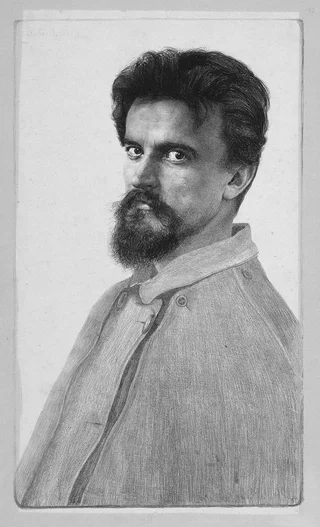
Karl Mediz spent 17 years working side by side with his wife, the painter Emilie Mediz-Pelikan. They met at the artists' colony in Dachau, near Munich, married in Vienna in 1891 and found little success there. In 1894 they settled in Dresden, which remained their home.
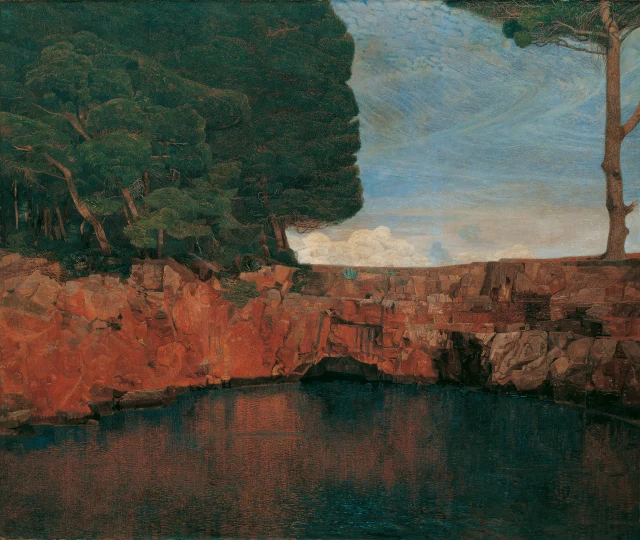
Mediz came from a Viennese merchant family and started out in his uncle's shop, until the portrait painter Friedrich von Amerling encouraged him to paint. He trained at the Vienna Academy, then in Munich and at the Académie Julian in Paris. His mature work leans toward the large, symbolic landscapes of Ferdinand Hodler and Giovanni Segantini, the Swiss and Italian painters of mountains. In 1902 the couple took part in an exhibition of the Hagenbund, a Vienna artists' society, and Mediz became a member. In February 1903 the Hagenbund gave them a large joint show. His Icemen went to the new Modern Gallery in the Belvedere, and Solitude, a canvas just over two metres wide, dates from the same years.
Emilie died in 1908, and Mediz withdrew from public life. He kept her work out of exhibitions, even though much of it belonged to the Dresden state collections. He died in Dresden in January 1945, and an exhibition at the Upper Austrian State Museum in Linz in 1986 brought his work back into view.