Kitagawa Utamaro
1753–1806 · Japan · Ukiyo-e
The story
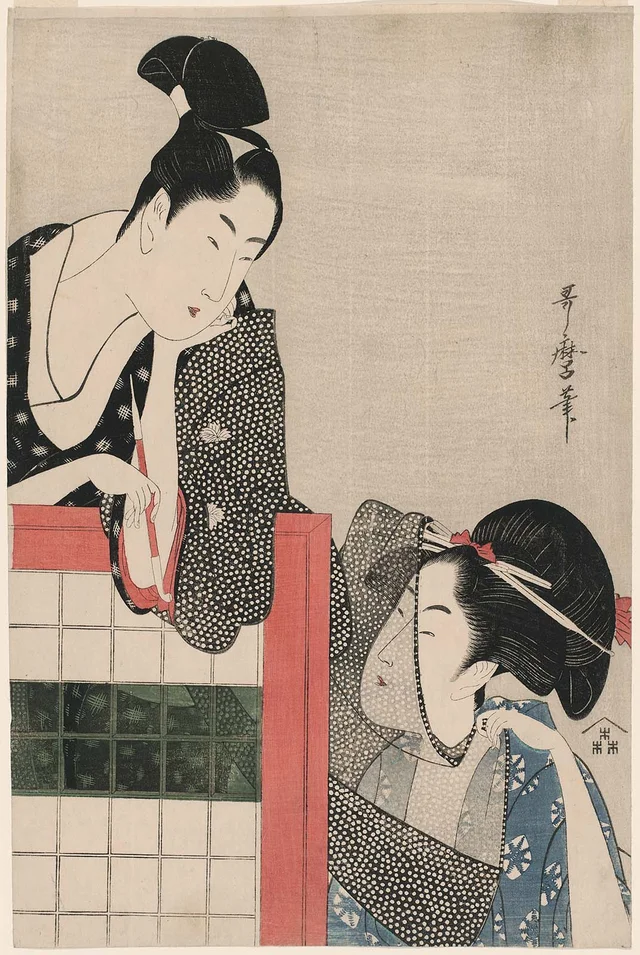
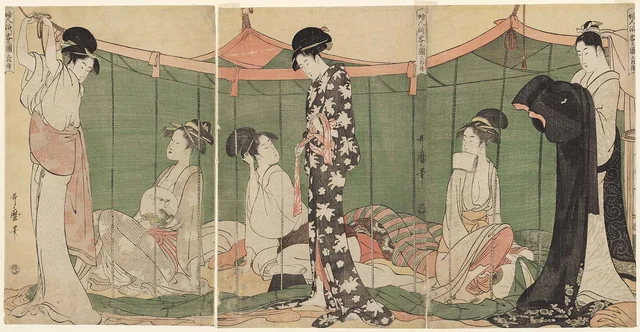
Utamaro did something new with the woodblock print: he brought the frame in close. Where earlier artists showed beautiful women full length, he cropped to the head and shoulders, the okubi-e or 'large-head picture', so that a courtesan or a teahouse waitress fills the sheet and you read the tilt of a neck or a half-hidden glance. Working through the 1790s with the Edo publisher Tsutaya Juzaburo, who backed his talent, he turned these portraits of named beauties into the most sought-after prints in Japan.
That fame ran into a nervous government. The shogunate policed what printmakers could show, and in 1804 Utamaro issued prints of Toyotomi Hideyoshi, a 16th-century warlord, pictured with his wife and concubines and each figure named outright. For mocking a ruler he was arrested and put in handcuffs for about 50 days.
He died two years later, in 1806. His prints reached Europe decades on and fed the Japanese craze that changed how French painters like Degas framed and cut off a figure.