Laurent de La Hyre
1606–1656 · France · Classicism
The story
While much of 17th-century Europe went in for Baroque drama, swirling bodies and theatrical light, a group of painters in Paris around the 1640s pulled the other way, toward calm, clear, orderly pictures. The style got the name Parisian Atticism, after the sober elegance of ancient Athens, and Laurent de La Hyre was one of its finest hands.
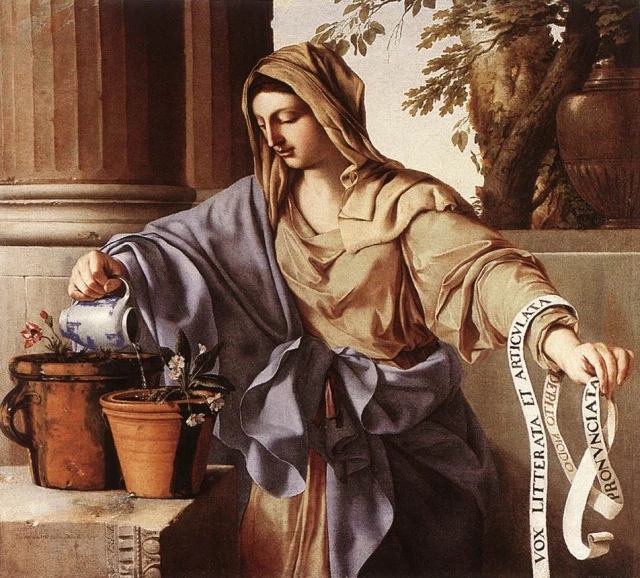
Born in Paris in 1606, he built quiet, balanced scenes with soft light and cool colour, closer in spirit to a still afternoon than to a storm. His best-known project is a series of the Seven Liberal Arts, made around 1649 and 1650, each a calm half-length woman standing for a discipline: Grammar watering her plants, Astronomy with her globe, Music with her instruments.
In 1648 he became one of the twelve founding members of the Académie royale de peinture et de sculpture, the body that would shape official French art for the next century and a half. He died in 1656, only 50, his reputation soon overshadowed by the grander machinery of Louis XIV's court painters, and was largely rediscovered in the 20th century.