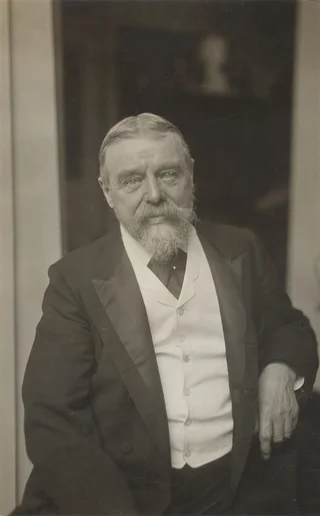
Lawrence Alma-Tadema
1836–1912 · Kingdom of the Netherlands, United Kingdom · Neo-Pompeian
The story
Lawrence Alma-Tadema sold Victorian Britain a daydream of the ancient world where the sun always shone on polished marble. Born in the Netherlands in 1836, he settled in London and painted Romans and Greeks lounging on terraces above impossibly blue seas, rendered with such care that critics nicknamed him the painter of marble.
He was, in his way, a researcher. He collected photographs of Roman ruins and archaeological finds and used them to get the details right, so his lolling patricians recline among accurate columns, silver and flowers. In The Roses of Heliogabalus of 1888 a young Roman emperor smothers his dinner guests under a flood of pink petals dropped from the ceiling, a story of decadent cruelty served up as pure decoration.
Knighted and hugely rich, he was one of the most successful painters of the Victorian age. After his death in 1912 his reputation collapsed for decades, dismissed as expensive kitsch, before film directors and a later generation of viewers rediscovered him. The wide marble sets of Hollywood epics owe a real debt to the world he built on canvas.
Works
10 works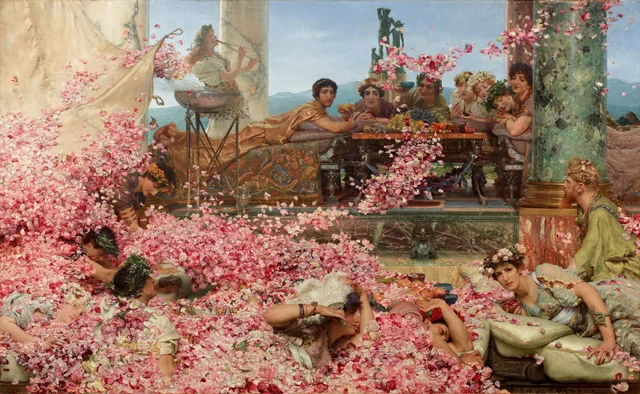 The Roses of HeliogabalusLawrence Alma-Tadema, 1888
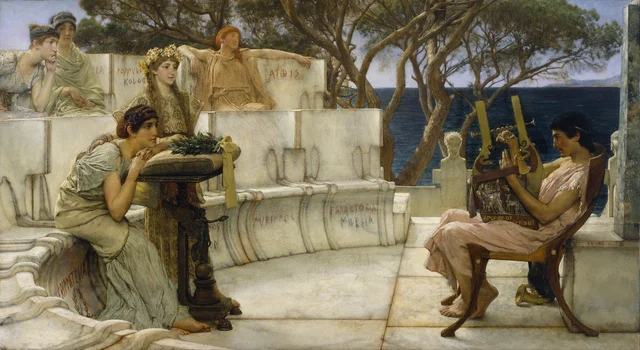 Sappho and AlcaeusLawrence Alma-Tadema, 1881
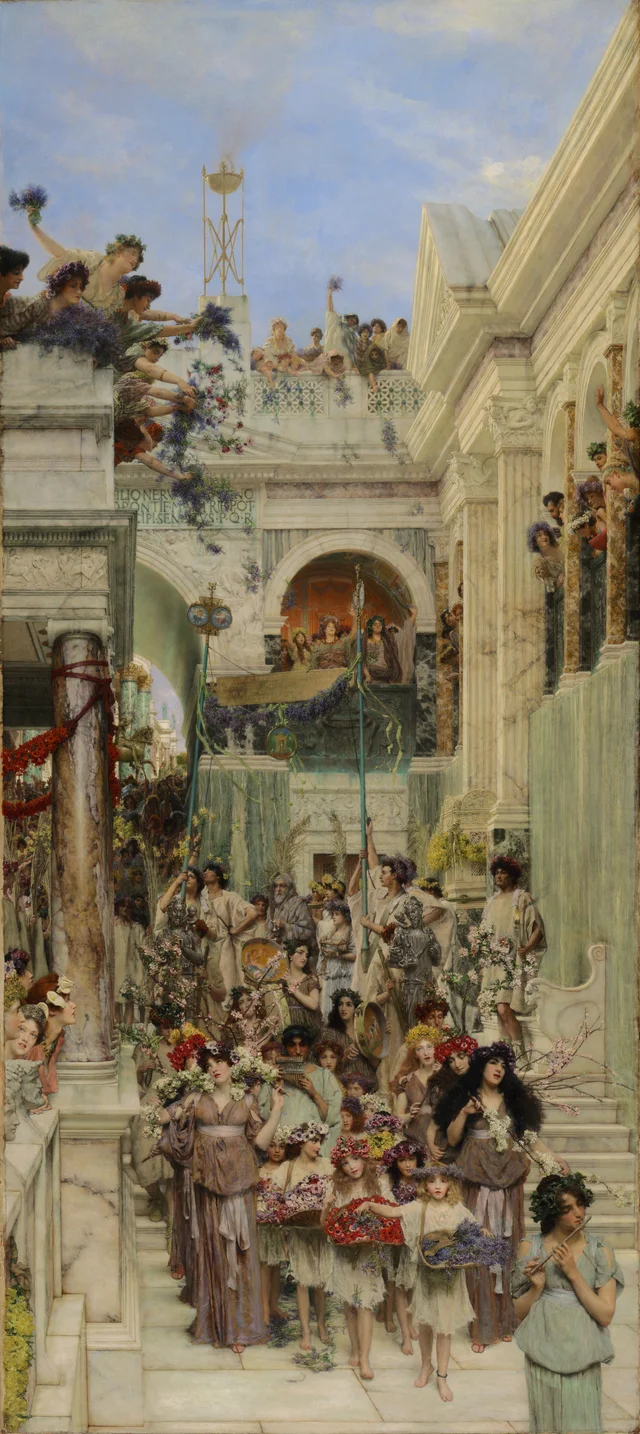 SpringLawrence Alma-Tadema, 1894
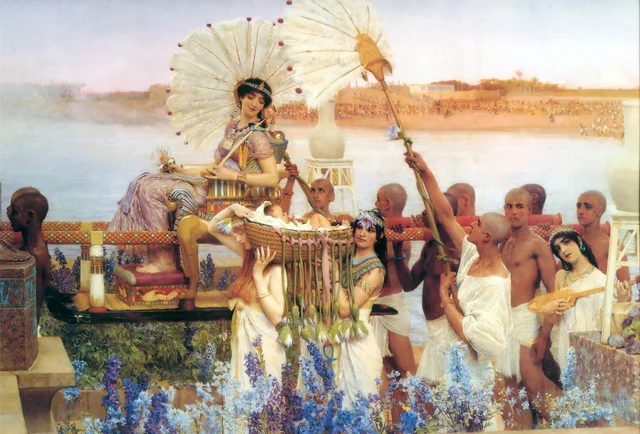 The Finding of MosesLawrence Alma-Tadema, 1904
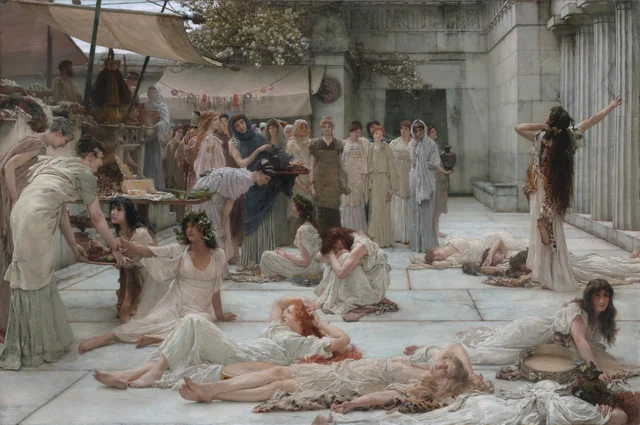 The women of AmphissaLawrence Alma-Tadema, 1887
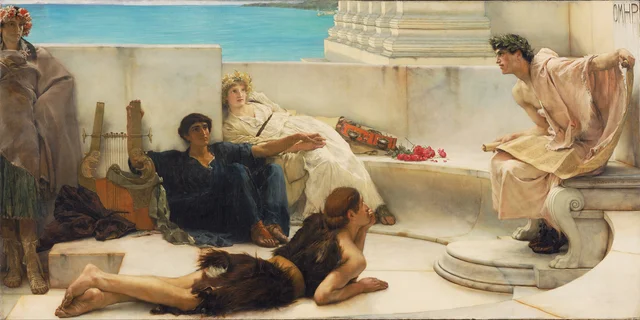 A Reading from HomerLawrence Alma-Tadema, 1885
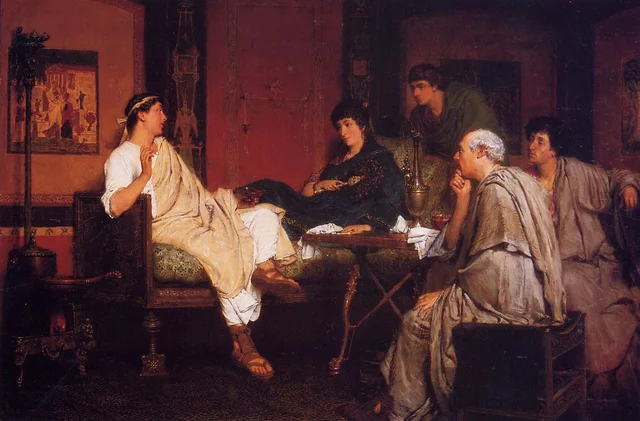 Tibullus at Delia's HouseLawrence Alma-Tadema, 1866
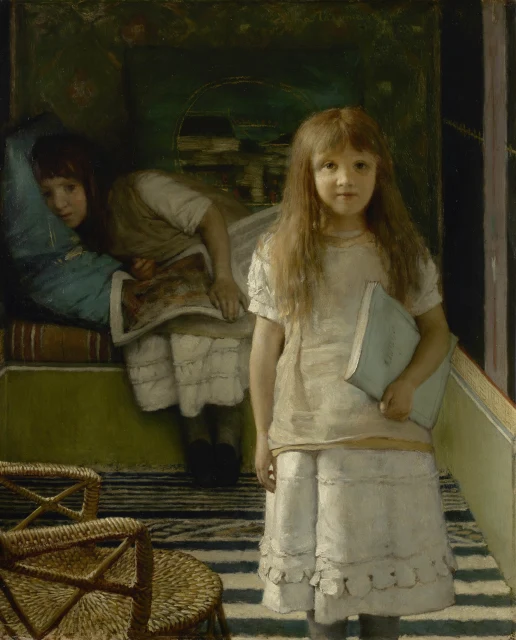 Our Corner (Opus CXVI)Lawrence Alma-Tadema, 1873
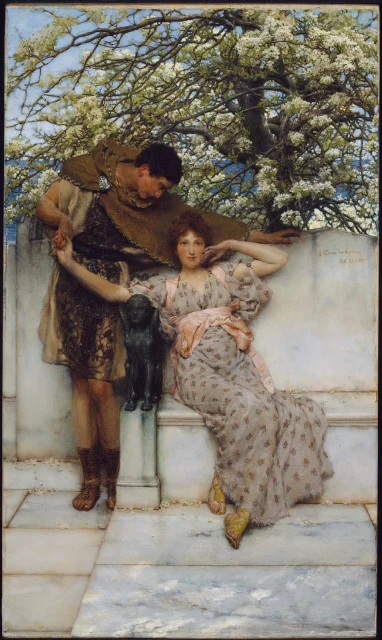 Promise of SpringLawrence Alma-Tadema, 1890
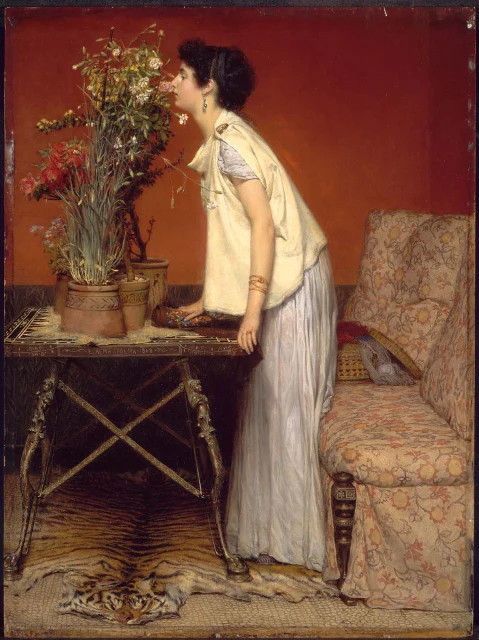 Woman and FlowersLawrence Alma-Tadema, 1868