Leonardo da Pistoia
1503–1548 · Republic of Florence · Mannerism
The story
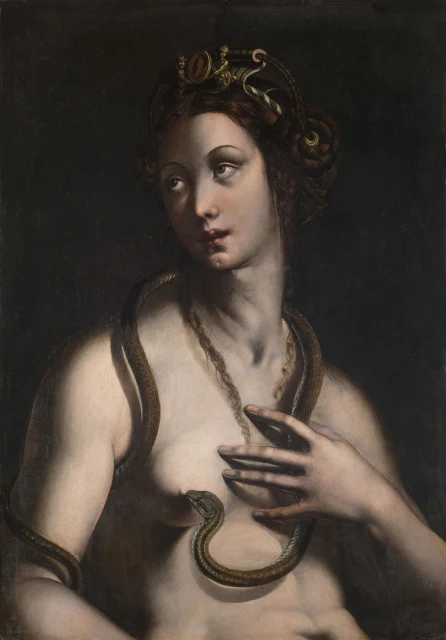
For about two centuries the Cleopatra in the Galleria Borghese in Rome carried other painters' names. A 1794 inventory gave it to Giulio Romano, Raphael's chief assistant. Later scholars moved it to Bronzino, the Florentine court portraitist, and then to Baldassarre Peruzzi, the Sienese painter and architect. In 1988 the art historian Pierluigi Leone de Castris proposed the name that has held since, Leonardo Grazia, known as Leonardo da Pistoia.
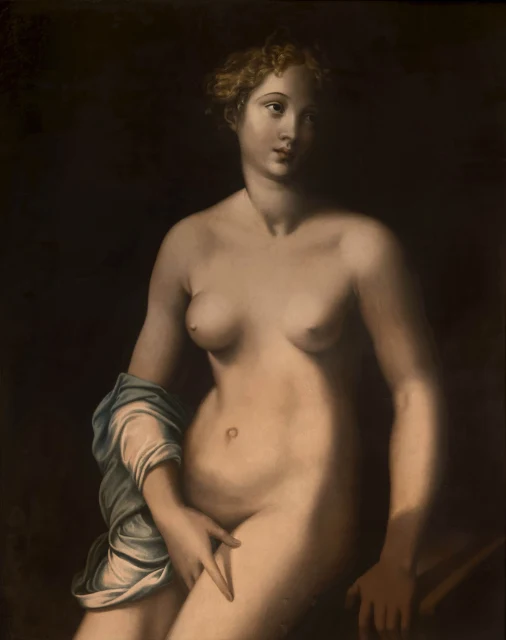
He was baptised in Pistoia, a Tuscan town under Florentine rule, in 1503. In Rome he worked under Giovan Francesco Penni, one of Raphael's heirs, and went with him to Naples, where the biographer Giorgio Vasari records him as "Lionardo called il Pistoia". Naples became his base. He ran his own workshop there and painted for churches such as San Domenico Maggiore, in a manner that draws on Giulio Romano, Perino del Vaga and Parmigianino. The Borghese Cleopatra and its companion Lucretia are both painted in oil on slabs of slate.