Léopold Robert
1794–1835 · Switzerland · Romanticism
The story
Louis Léopold Robert left the Swiss watchmaking town of La Chaux-de-Fonds at sixteen and went to Paris to train, eventually in the studio of Jacques-Louis David, the great painter of the Revolution and Empire. When Napoleon fell, a Swiss citizen had little future in official French art, so in 1818 Robert crossed into Italy, and Italy made him.
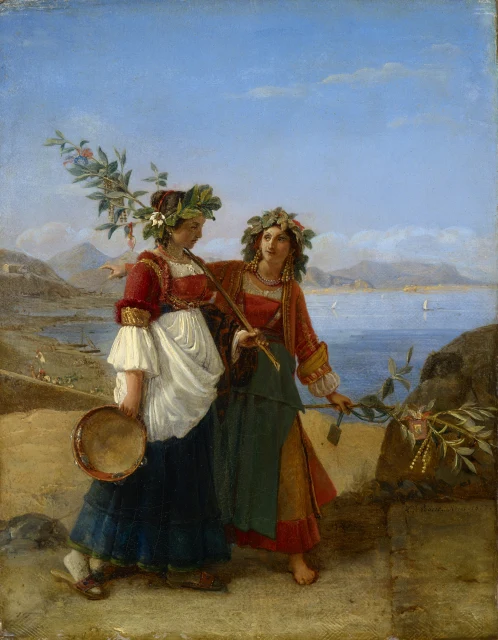
He found his subject in the countryside around Rome: brigands, the armed outlaws who haunted the hills, and the peasants and pilgrims of the Roman Campagna. He painted them with unexpected dignity, grave upright figures in bright local costume, and the pictures sold across Europe. He planned a great cycle on the four seasons of Italian life.
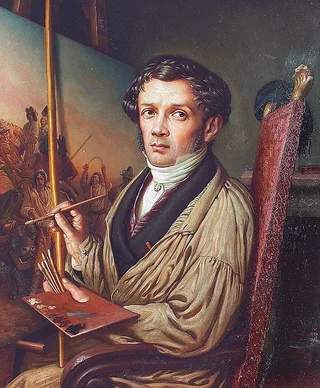
The ending reads like one of his own scenes. Robert had fallen hopelessly in love with Charlotte Bonaparte, Napoleon's niece, who was in mourning for her husband, a match far above his reach. He moved to Venice to work on the fourth painting of his cycle, fishermen of the Adriatic. Worn down and without hope, he cut his own throat before his easel in March 1835, on the anniversary of a brother's suicide years before. He was 40.