Lorenzo Veneziano
1336–1390 · Republic of Venice · Gothic, Venetian School
The story
Venetian painting in the middle of the 14th century still looked east. For generations its altarpieces had followed Byzantine models brought over from Constantinople, with rigid figures on a gold ground. Lorenzo Veneziano is the painter usually credited with turning that tradition toward the softer, more graceful Gothic style then spreading across Europe.
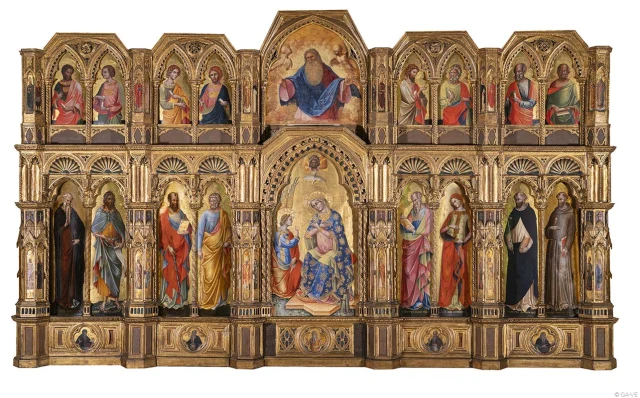
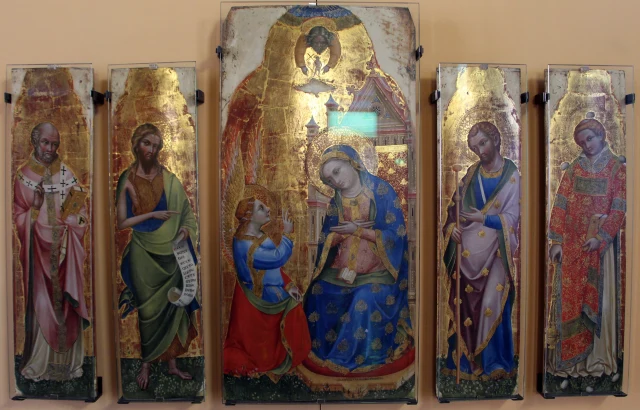
Little about his life is documented; he is known mainly through signed and dated works made between about 1356 and 1372. The earliest of them still hangs in the Gallerie dell'Accademia in Venice: an Annunciation surrounded by saints, painted in 1357 for the high altar of the church of Sant'Antonio di Castello. It is called the Lion Polyptych after the man who paid for it, a Venetian patrician named Domenico Lion, who had himself shown kneeling among the holy figures.
In Lorenzo's panels the saints begin to turn and sway, their robes fall in real folds, and faces take on expression, while behind them stays the gold background of the older manner. He was not related to the earlier Paolo Veneziano, whose workshop had dominated painting in the city; the shared name simply means both came from Venice.