Louis Anquetin
1861–1932 · France · Cloisonnism
The story
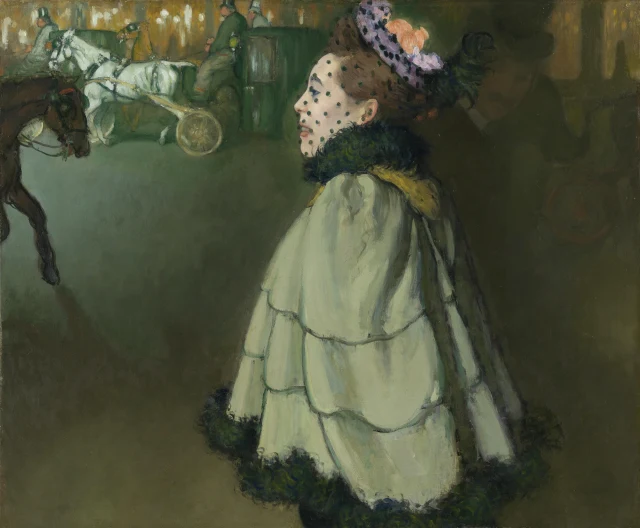
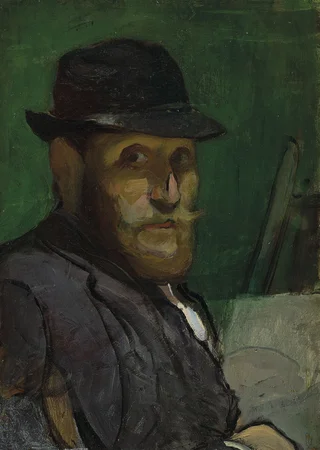
In the mid-1880s Louis Anquetin was one of the most promising young painters in Paris. He studied at the studio of Fernand Cormon alongside Vincent van Gogh, Henri de Toulouse-Lautrec, and Émile Bernard, and for a while his friends thought he might turn out to be the leader among them.
Around 1887 he and Bernard worked out a new way of painting: flat zones of strong colour penned in by dark outlines, like a stained-glass window or a Japanese print. The critic Édouard Dujardin named the style Cloisonnism, after the cloisonné enamel it resembled, and it fed straight into the bolder, flatter art that Gauguin and others were reaching for. Anquetin's 'Avenue de Clichy,' a Paris street glowing under gaslight, is the picture people point to.
Then he changed his mind. In the 1890s Anquetin turned his back on the avant-garde and gave himself to the Old Masters, above all Rubens, trying to paint grand allegories and mythologies in a 17th-century manner. The art world that had watched him closely simply moved on, and his name faded while his old friends became famous.
He kept painting and writing about technique until his death in Paris in 1932. The handful of canvases from his two or three Cloisonnist years are what he is remembered for today, far more than the grand mythologies he spent his later life on.