Louis-Jean-François Lagrenée
1725–1805 · France · Rococo
The story
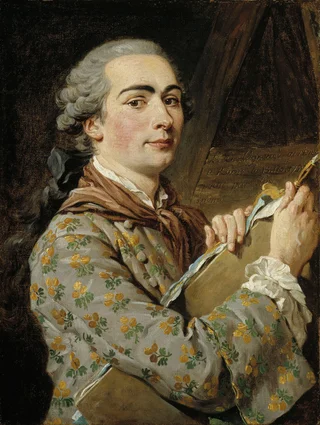
Around 1760 a French history painter in his mid-thirties packed up for Saint Petersburg, summoned to serve as court painter to Elizabeth, the reigning empress of Russia, and to head her young Academy of Fine Arts. His name was Louis-Jean-François Lagrenée, called 'the elder' to tell him apart from his brother Jean-Jacques, also a painter.
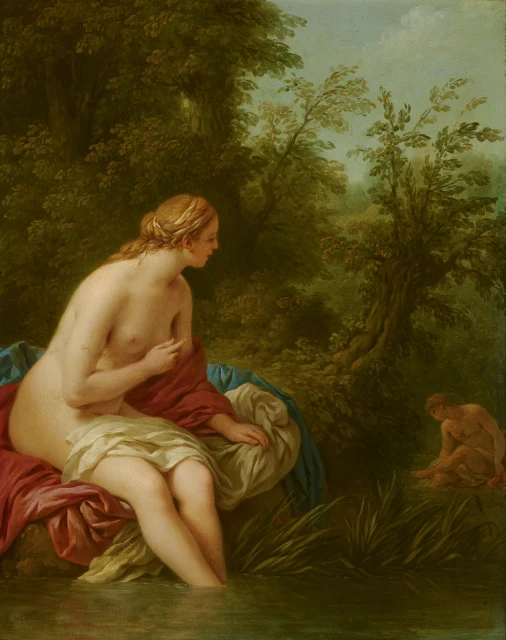
The Russian post lasted barely two years, Elizabeth died and the arrangement came apart, and Lagrenée went back to a Paris career that would run for four decades. He had taken the Prix de Rome, the state prize that sent promising young artists to study in Italy, back in 1749, and Italy stayed with him: smooth, polished mythologies and small cabinet pictures of gods and lovers in the graceful Rococo taste of the mid-century.
From 1781 he directed the French Academy in Rome, the very school where his own generation had trained, and in old age he was given honorary charge of the paintings in the Louvre. In 1804 Napoleon made him a chevalier of the Legion of Honour, and he died the following year, past eighty.