Louis-Léopold Boilly
1761–1845 · France · Neoclassicism, Genre painting
The story
In April 1794, at the height of the Terror, Louis-Léopold Boilly was in real danger. A fellow painter had denounced his small, mildly erotic genre scenes to a patriotic artists' society as an offence against Republican morals, the kind of charge that could end at the guillotine. Warned by a friend, Boilly improvised a large patriotic canvas, The Triumph of Marat, glorifying the murdered revolutionary, and had it standing in his studio when the inspectors came. The picture saved him.
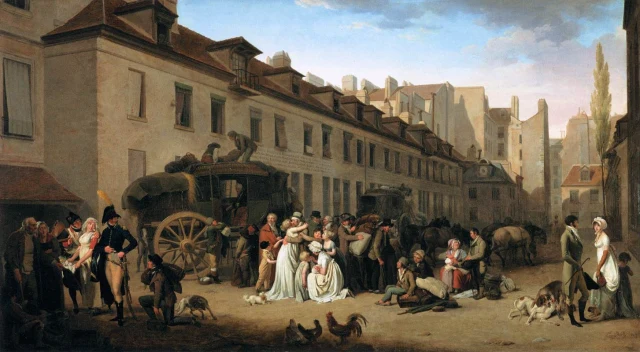
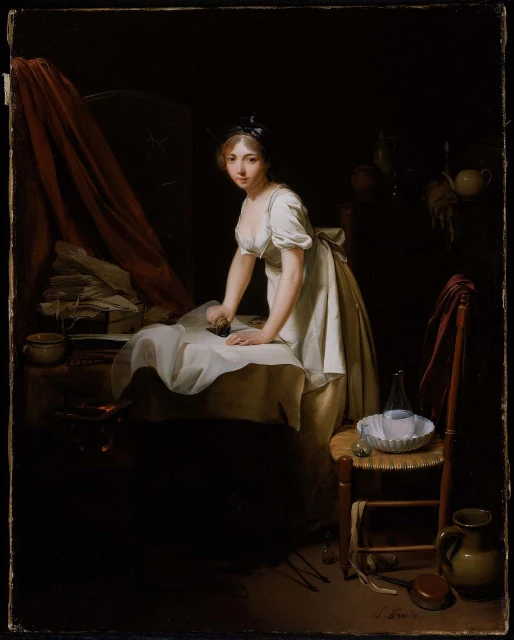
That instinct for reading the moment ran through his whole long life. Born in northern France in 1761, he came to Paris around 1787 and stayed through the monarchy, the Revolution, Napoleon's empire and two restored kings, painting the city's people the entire time. He turned out thousands of small, precise portraits and crowd scenes packed with ordinary Parisians in the street, at the theatre, jostling at a carriage door.
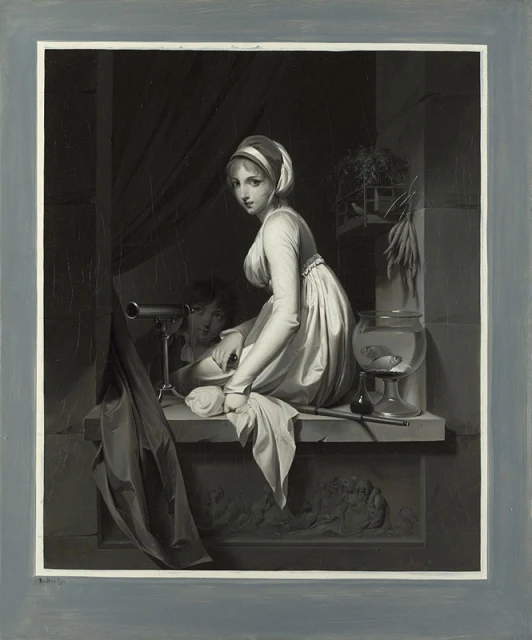
He also had a gift for fooling the eye. In 1800 he exhibited a picture that imitated a jumble of prints and drawings under a sheet of cracked glass and titled it simply Un trompe-l'oeil. It was the first time that phrase was attached to the genre, and the name stuck to the whole tradition of paint pretending to be something else.