Lubin Baugin
1612–1663 · France · Baroque, Still life painting
The story
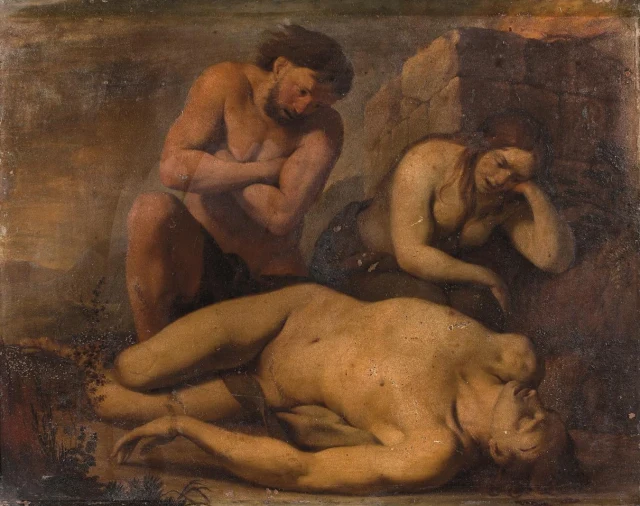
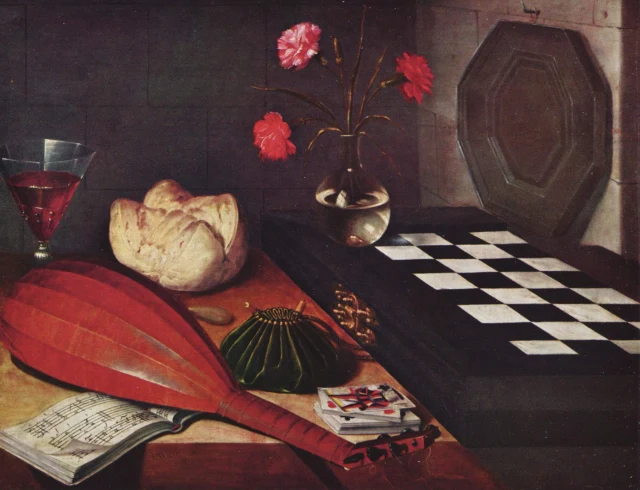
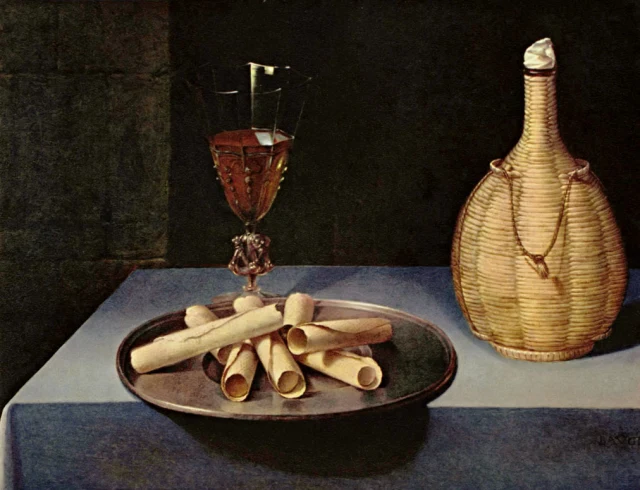
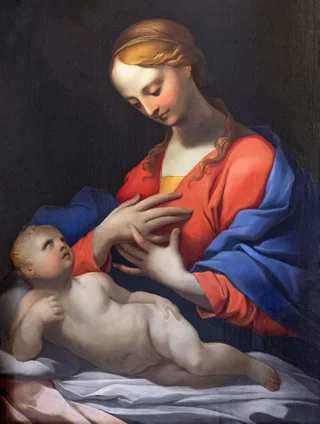
The still life with a chessboard in the Louvre is signed simply BAVGIN, and for much of the 20th century scholars wondered whether that name belonged to two different men. One Baugin painted a handful of spare, silent still lifes, a glass of wine, a loaf, a small lute, playing cards and a purse laid out on a dark table. The other painted soft, sweet religious pictures for Paris churches, among them the chapels of Notre-Dame, in a manner that later earned him the nickname le petit Guide, the little Guido, after the Bolognese painter Guido Reni.
They were one man. Lubin Baugin came from Pithiviers, south of Paris, and in 1629 became a master in the painters' guild of Saint-Germain-des-Prés, an abbey suburb with its own guild where many Flemish painters worked. The still lifes are usually dated to around 1630. In the 1630s he went to Italy and settled in Rome, and around 1641 he was back in Paris as a painter of religious subjects. In 1963 the French art historian Jacques Thuillier argued that the two careers belonged to a single painter, and an exhibition he prepared, shown in Orléans and Toulouse in 2002, hung them side by side.
Baugin was admitted to the Royal Academy of Painting and Sculpture in 1651 and struck off four years later for not attending. For a long time only four of his still lifes were known. In 2025 a fifth, with the small almond cakes called financiers, came up at an auction house in Vichy.