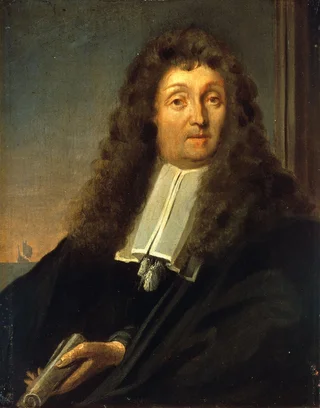
Ludolf Bakhuizen
1630–1708 · Dutch Republic · Maritime painting, Dutch Golden Age
The story
In 1672 the Dutch Republic faced invasion by land and sea at once, a crisis Dutch history still calls the disaster year. That same year the two Willem van de Veldes, father and son and the country's leading painters of ships, left Amsterdam to work for the English crown. Their departure opened a gap, and Ludolf Bakhuizen filled it.
Bakhuizen had arrived in Amsterdam from Emden, in East Frisia, as a merchant's clerk, and taught himself to draw ships in pen before he ever touched oils. He became the foremost Dutch marine painter of his generation, prized above all for rough weather.
He earned that reputation the hard way. During storms he would have himself rowed out into open water to watch how the waves broke and the light moved, then bring it back to the studio. His workshop became a stop for important visitors to Amsterdam, and Tsar Peter the Great of Russia, in the city to learn shipbuilding, is said to have sat with him for drawing lessons.
Works
6 works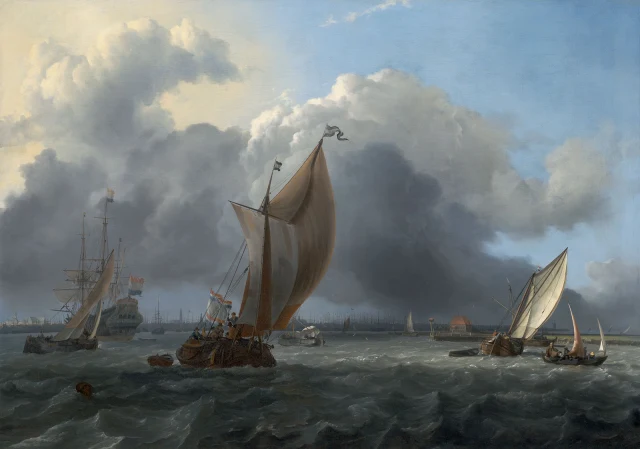 Ships in a Gale on the IJ before the City of AmsterdamLudolf Bakhuizen, 1666
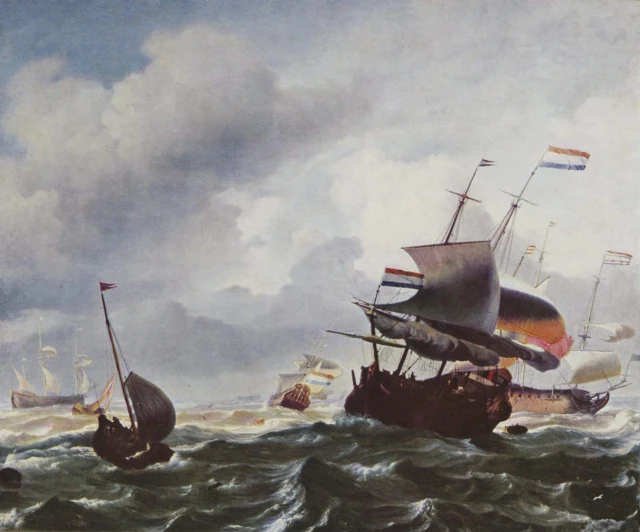 Ships in a StormLudolf Bakhuizen, 1669
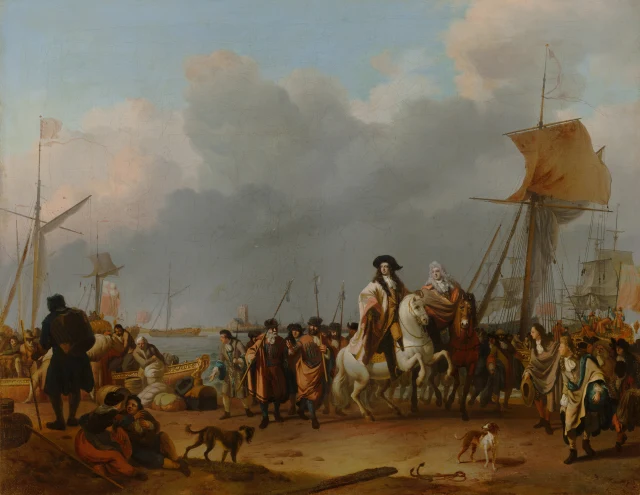 The Arrival of Stadholder-King Willem III (1650-1702) in the Oranjepolder on 31 January 1691Ludolf Bakhuizen, 1692
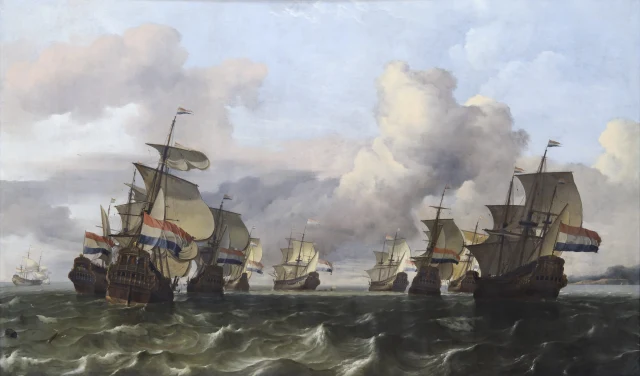 The Return of the Dutch East India Company FleetLudolf Bakhuizen, 1677
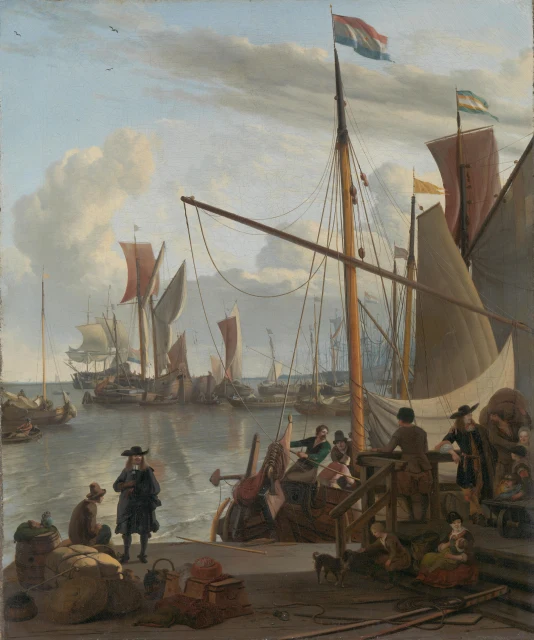 The Y at Amsterdam, seen from the Mosselsteiger (mussel pier)Ludolf Bakhuizen, 1673
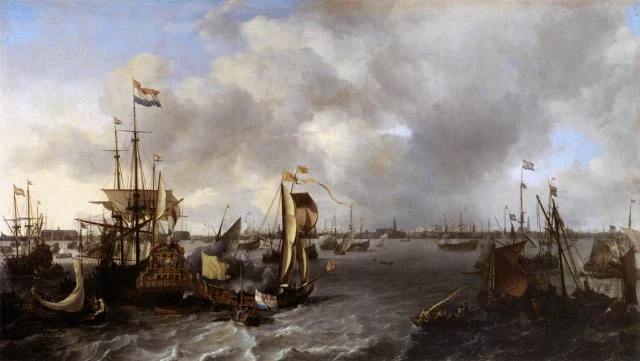 View of Amsterdam with Ships on the IJLudolf Bakhuizen, 1666