Luis de Morales
1509–1586 · Crown of Castile · Mannerism
The story
In 1581 King Philip II of Spain passed through the town of Badajoz, near the Portuguese border, and found there an old painter he had all but forgotten. Luis de Morales was in his seventies and destitute. The king, seeing him so reduced, granted him a small pension of 300 ducados a year, enough to live on. Morales drew it for five years, until his death in 1586.
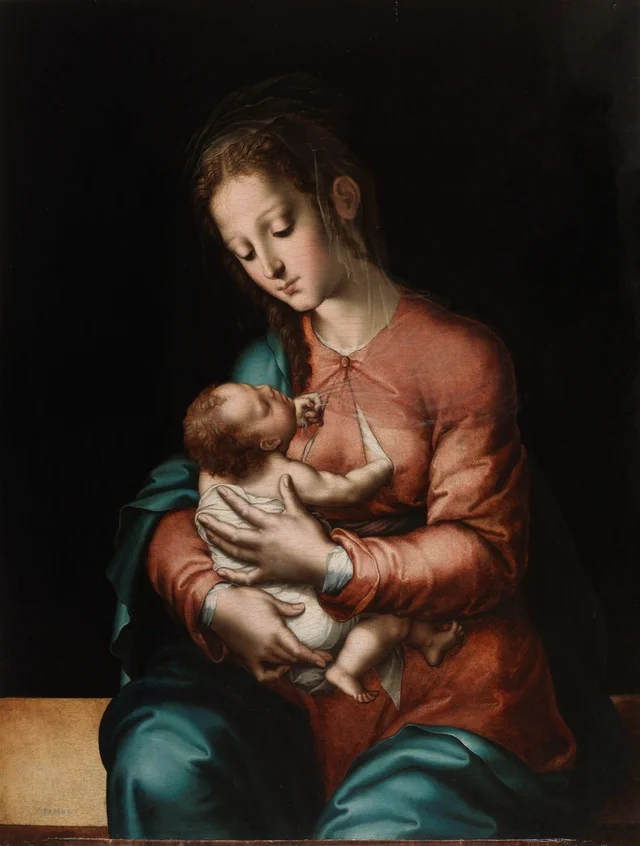
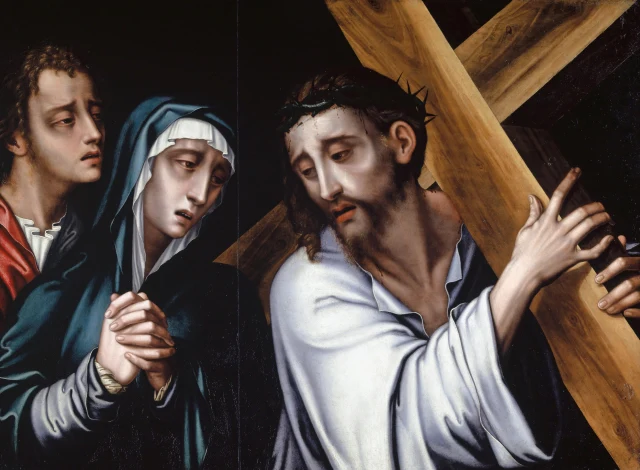
He had spent almost his whole life in that provincial corner of Extremadura, far from the court. His subject was rarely anything but devotion: the Virgin holding a sleeping Child, Christ carrying the cross, the face of the Man of Sorrows, painted with a smooth, enamel-like finish and a tenderness that earned him the name El Divino, the Divine One. The manner blends Flemish precision with the soft, smoky shadows he took from Leonardo's Italian followers.
Philip, who preferred grand Italian painters for his new palace of the Escorial, gave Morales only a single royal commission and little enthusiasm. Yet the small, intense panels the painter turned out for parish churches and private prayer spread his reputation across Spain during his lifetime. Many hang today in the Prado in Madrid, where the close-up devotional faces still carry that polished, mournful calm.