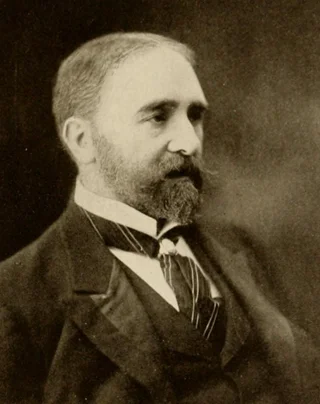
Luke Fildes
1844–1927 · United Kingdom · Realism, Social realism
The story
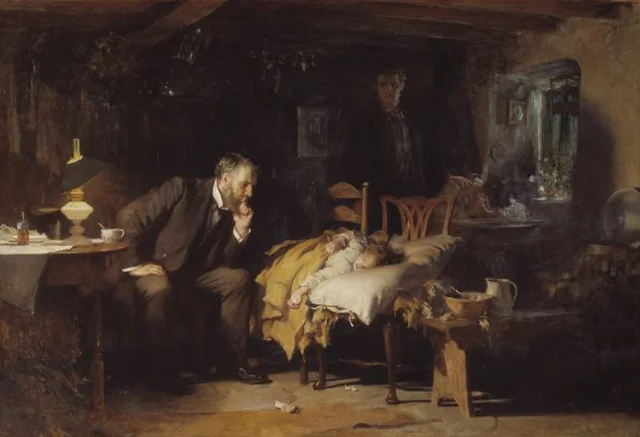
When the sugar magnate Henry Tate commissioned Luke Fildes in 1890 to paint a subject of his own choosing, Fildes reached back thirteen years to the worst morning of his life. On Christmas Day 1877 his first son, Philip, aged one, had died of typhoid, and Fildes never forgot the country doctor, Gustavus Murray, who had sat up through the nights watching the child.
The result, called simply The Doctor, shows a physician leaning over a sick child asleep across two mismatched chairs in a poor cottage, first light coming through the window while the helpless parents wait in the shadow. In 1891 Britain had few reliable cures and no health service, and a doctor's real gift was often his attention, so Fildes made that watchfulness the whole subject. The painting became one of the most reproduced images of the Victorian age and was still being cited a century later in arguments about what doctors are for.
Fildes had come up as an illustrator for The Graphic, a weekly that put the London poor on middle-class walls, and he drew the empty chair in Charles Dickens's study after the novelist died in 1870 leaving Edwin Drood unfinished. In his later years he turned society portraitist and painted the state portraits of Edward VII and George V. For The Doctor he had a cottage interior built in his studio and used two of his own children as models for the sick child's head and arm.