Lydos
Ancient Greece · Archaic Greek art
The story
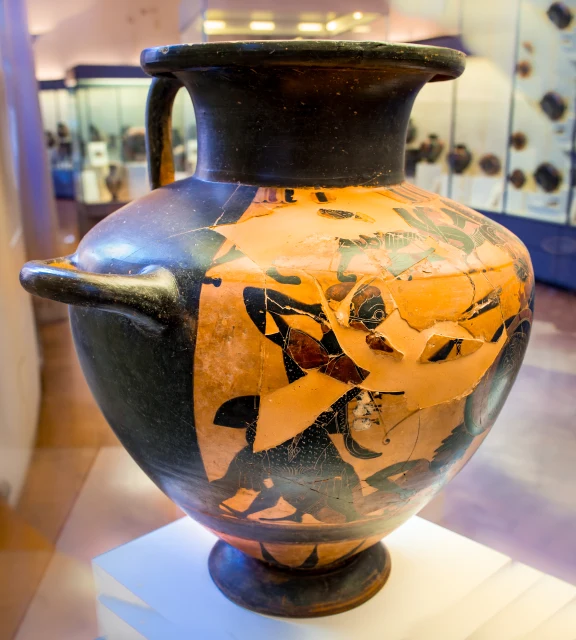
Around 550 BC an Athenian painter covered a big wine-mixing bowl, a column-krater, with a procession that runs right round the vase. Hephaistos, the smith god thrown out of Olympus, rides home on a mule, coaxed back with wine by Dionysos, while satyrs and maenads dance alongside. That krater, now in the Metropolitan Museum in New York, is among the first vases to show wine, women and song together, even in mythological dress.
The painter signed his work only twice. One signature survives on fragments of a round bowl found on the Acropolis of Athens and painted with the battle of the gods against the giants. He wrote ho Lydos, "the Lydian". Lydia was the kingdom of Croesus in what is now western Turkey, so he either came to Athens from there or was born to Lydian parents. A painter who signed a small cup a generation later, also kept in the Villa Giulia, used the same name, and the museum treats the two as namesakes.
He worked from about 560 to 540 BC at the centre of a busy workshop, and so many vases come close to his hand that specialists often settle for "in the style of Lydos".