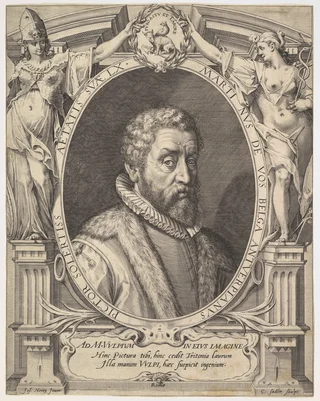
Maerten de Vos
1532–1603 · Southern Netherlands · Mannerism, Renaissance
The story
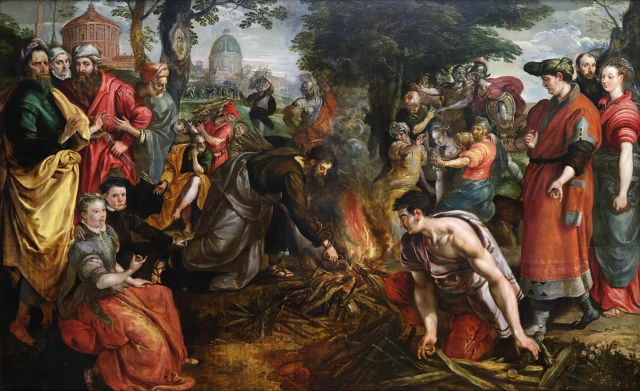
In 1566 a wave of Protestant image-breaking swept the Low Countries, and mobs stripped the churches of Antwerp of their altarpieces and statues. Maerten de Vos would spend the last decades of his life refilling those bare walls.
He had trained well for it. After his first lessons from his father and then from the Antwerp master Frans Floris, he crossed the Alps around 1552 and worked in the Venice studio of Tintoretto, the great painter of crowded, dramatic religious scenes, also visiting Rome and Florence. He carried Italian colour and movement home into Flemish painting, and when Floris died in 1570 de Vos became one of the leading artists in the city.
His moment came in the 1590s, once Catholic worship was restored and the guilds of Antwerp wanted their chapels furnished again. De Vos turned out altarpiece after altarpiece for them, the city's chief religious painter in the years just before a local boy named Peter Paul Rubens grew up to take that role. He was also a tireless designer for the Antwerp print shops, and those engravings travelled as far as the Spanish colonies in the Americas, where local painters copied his compositions.