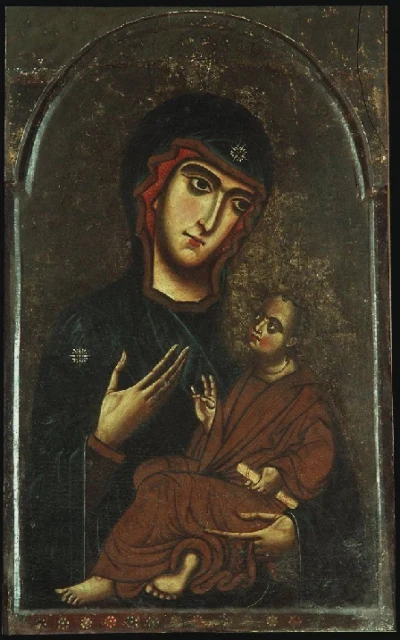
Maestro della Sant'Agata
Italian
The story
This name belongs to no one we can name. The Master of Saint Agatha is a label scholars gave to an anonymous painter active in Pisa around the middle of the 13th century, a way of grouping several panels that clearly came from one hand. The title is borrowed from one of those works, and the artist's real name is lost.
He painted in the Byzantine-influenced manner that ruled Tuscan art before Cimabue and Giotto, the style Italians later called the maniera greca: gold grounds, long solemn faces, the Virgin and Child laid out in flat, patterned splendour instead of real space. The Madonna now in the Uffizi, made around 1250, is one of the panels that let historians recognise his touch, the sort of devotional image a Pisan church would have raised above its altar.