Marco Zoppo
1433–1478 · Papal States, Republic of Venice · Renaissance, Northern Italian Renaissance
The story
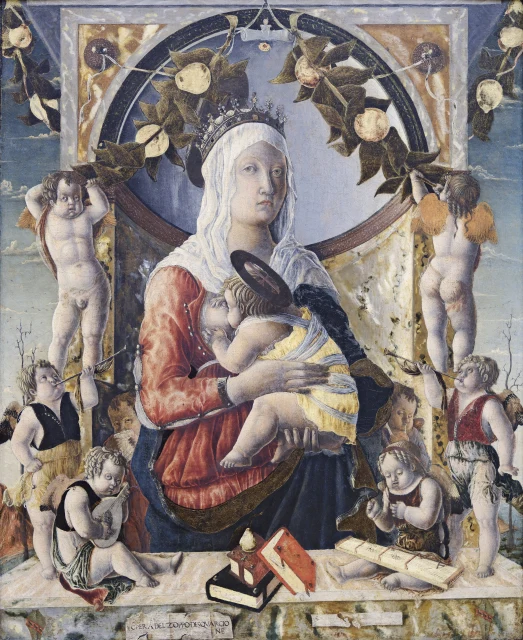
On a small painted label at the edge of a Madonna in the Louvre, the painter signed himself Opera del Zoppo di Squarcione, the work of Zoppo, of Squarcione. The second name was a family claim. In May 1455 Marco Zoppo, a young painter from Cento near Bologna, signed a contract in Padua that made him the adopted son of Francesco Squarcione, a painter and teacher who ran a busy workshop and liked to adopt his most gifted pupils. Andrea Mantegna, later court painter at Mantua, had been through the same arrangement.
It did not last. Zoppo decided the contract served Squarcione far more than himself, moved to Venice and went to law to break his ties with his adoptive father. The signature on the Louvre panel, where the Virgin nurses the Child among eight angel musicians, places the picture around 1455.
Zoppo worked afterwards between Bologna and Venice, and his later pictures grew brighter under the influence of the Venetian painter Giovanni Bellini. In 1471 he painted a large altarpiece of the Virgin enthroned with four saints for the church of San Giovanni Battista in Pesaro, built by the city's ruler Alessandro Sforza. It is now in Berlin. He died in Venice around 1478, and an album of his pen drawings survives in the British Museum.