Marie-Guillemine Benoist
1768–1826 · France · Neoclassicism
The story
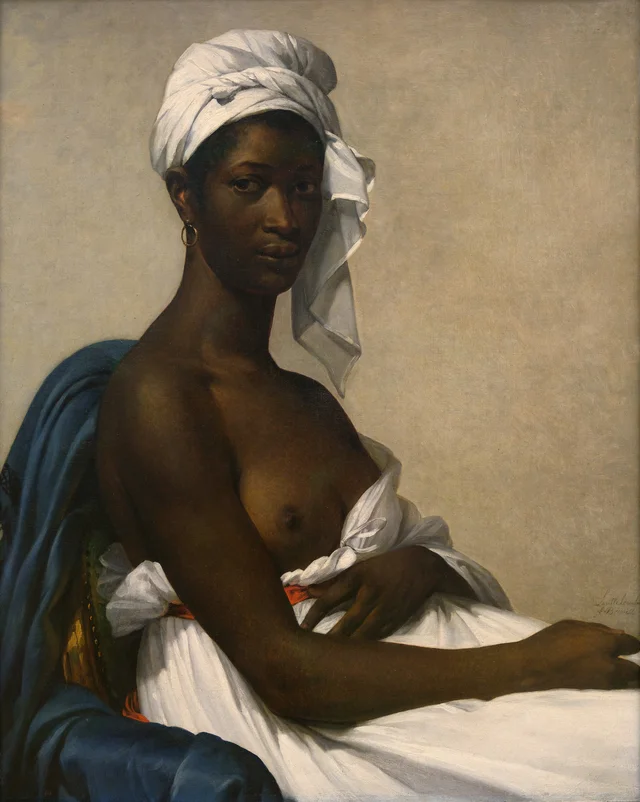
In 1800 the Paris Salon hung a life-size portrait of a young Black woman, seated calmly in a gilded chair and looking straight out at the visitor. Her name, recovered by later research, was Madeleine, a servant recently arrived from Guadeloupe in the Caribbean, in the household of the painter's brother-in-law. The painter was Marie-Guillemine Benoist, who had trained under two of the period's biggest names: the portraitist Élisabeth Vigée Le Brun and the history painter Jacques-Louis David.
The timing gives the picture its charge. France had abolished slavery in its colonies in 1794 and would restore it under Napoleon in 1802. Benoist painted Madeleine in the short gap between those dates, and gave her a name, a steady gaze and the same dignity a society portrait gave its duchesses. Louis XVIII bought the canvas for the state in 1818, and it hangs in the Louvre today.
Benoist had a real public career under the Revolution and the Empire, with a government stipend and official commissions. When her husband took a senior post under the restored monarchy after 1814, she stopped exhibiting, and this portrait stayed her best-known work.