Martin Johann Schmidt
1718–1801 · Archduchy of Austria · Baroque, Rococo
The story
Across Lower Austria, in parish churches and in the great abbeys along the Danube, the altarpieces keep turning out to be by one man, Martin Johann Schmidt. People called him the Kremser Schmidt, after the town of Krems, to tell him apart from a lesser painter of the same name. He lived and worked for most of his long life in neighbouring Stein, where his house still stands.
He was the son of a sculptor and learned his trade from a local painter, never at an academy. His first large commissions came close to home, for the parish church in Stein in 1751 and the Piarist church in Krems in 1756. From there the orders spread, and the richest groups of his work are today at the abbeys of Göttweig and Seitenstetten and at St. Paul in Carinthia.
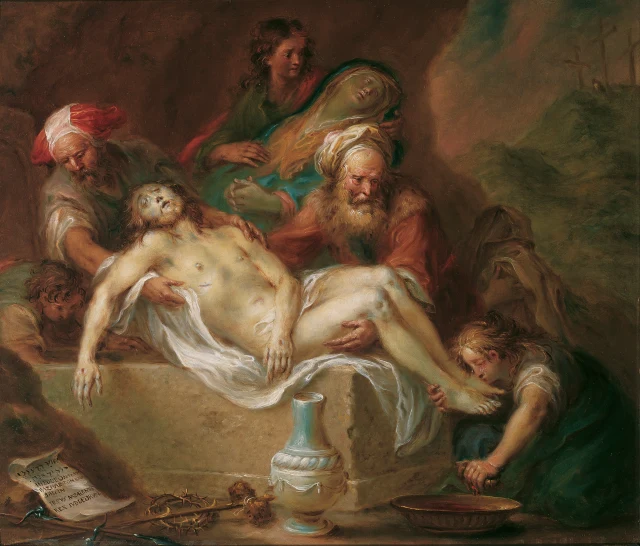
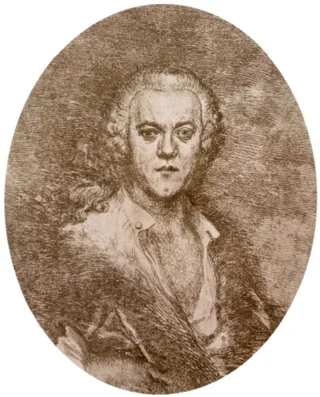
He also made etchings, and they show how closely he had studied Rembrandt's prints. His early pictures sit in a warm half-dark, and from about 1770 his colours grow stronger and livelier. In 1768 the imperial Academy in Vienna admitted him as a history painter in spite of his lack of formal training, and his reception pieces are now in the Belvedere. The Belvedere's Entombment of Christ dates from 1780, when he was over 60. He died in Stein in 1801, aged 82.