Martin Knoller
1725–1804 · Habsburg Monarchy · Rococo, Baroque
The story
In the abbey church at Neresheim, in Swabia, seven domes carry frescoes that Martin Knoller painted between 1770 and 1775, a cycle on the life of Christ with more than 200 figures in the main dome alone. By then he lived in Milan, a Tyrolean with commissions on both sides of the Alps.
He was born in 1725 in Steinach am Brenner, below the Brenner Pass, and learned his trade as assistant to Paul Troger, the leading Austrian fresco painter, travelling with him to Salzburg and Vienna. In 1755 he went to Rome, where he studied with Anton Raphael Mengs, the German artist, and met the ideas of Johann Winckelmann, the German scholar of ancient art. Both argued for a stricter style modelled on antiquity, and Knoller's later work sits between Rococo and Neoclassicism.
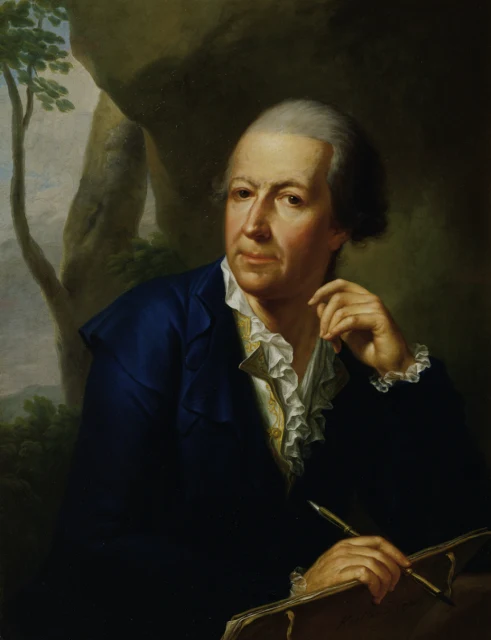
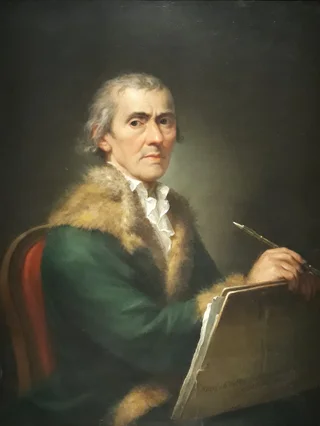
In Milan he married a merchant's daughter, found a patron in Count Karl Joseph Firmian, the Austrian minister governing Lombardy, and taught at the Brera Academy. The big commissions kept coming from the north. Ettal Abbey in Bavaria had him fresco the dome over its choir in 1769, and later came the collegiate church at Gries near Bolzano and the Palais Taxis in Innsbruck in the mid-1780s. He also made portraits, and the Belvedere owns his 1791 portrait of the painter Joseph Rosa. He died in Milan in 1804.