Martinus Rørbye
1803–1848 · Kingdom of Denmark · Danish Golden Age
The story
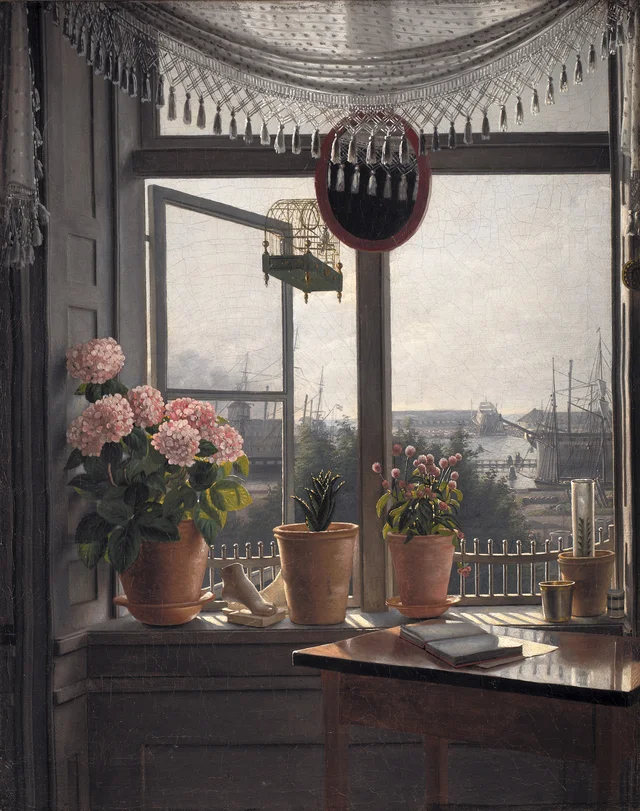
One of the best-loved Danish pictures of the 19th century is simply the view from a young man's bedroom window. In 1825 Martinus Rørbye, barely into his twenties, painted the sill of his family home on Amaliegade in Copenhagen, with potted plants and a caged bird in the foreground and the harbour beyond. He made it just as he was about to leave that childhood home for good.
Rørbye had come up through the Royal Danish Academy as a favourite pupil of Christoffer Wilhelm Eckersberg, the teacher who set a whole generation of the Danish Golden Age to studying nature closely and painting exactly what they saw. The window picture holds that lesson together with a restlessness for the wider world past the harbour mouth.
He followed it. Of all the Golden Age painters he travelled the most, north to Norway and Sweden and on a long Grand Tour from 1834 through Paris, Rome, Sicily, Greece and Constantinople, filling sketchbooks with fishermen, markets and mosques. For all those far journeys, the small view from the Amaliegade window is the work that has kept his name alive.