Master of Mondsee
Holy Roman Empire · Late Gothic
The story
In 1471 Benedikt Eck, abbot of Mondsee in Upper Austria, commissioned Michael Pacher, the famous Tyrolean painter and carver, to make the altar for the pilgrimage church of St Wolfgang, which belonged to his abbey. For his own abbey church he later turned to a painter whose name is lost, and the high altar consecrated there in 1497 gave that man his name, the Master of Mondsee. Records from 1490 mention a painter at Mondsee, but no one has securely matched a name to the work.
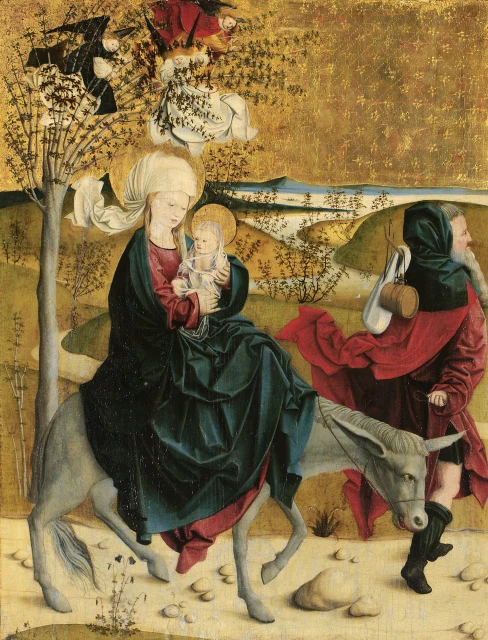
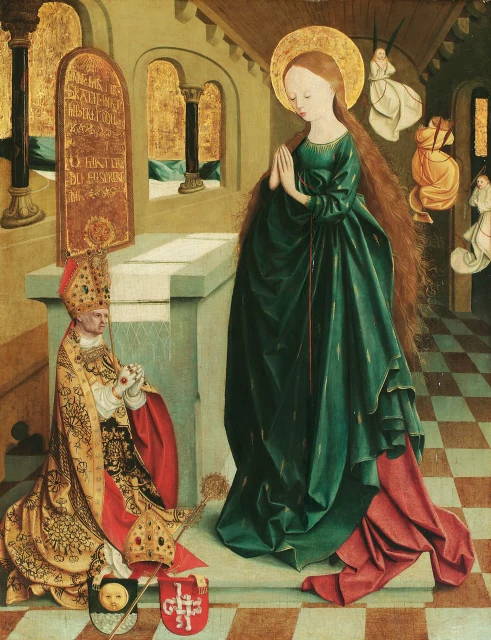
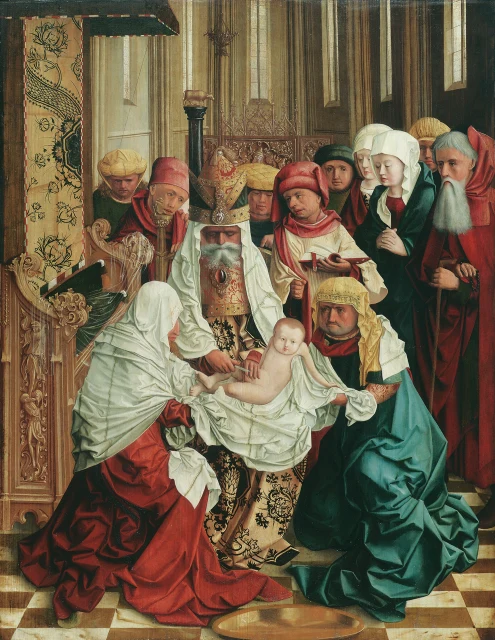
He seems to have trained in Vienna, close to the anonymous Master of the Schotten Altar, and he combined precise Netherlandish detail with gold backgrounds that were by then growing old-fashioned. The main panels told Christ's childhood, from the Adoration of the Magi to the 12-year-old Jesus in the Temple. On a smaller panel the abbot himself kneels before Mary, shown as a young temple maiden in a dress patterned with ears of grain.
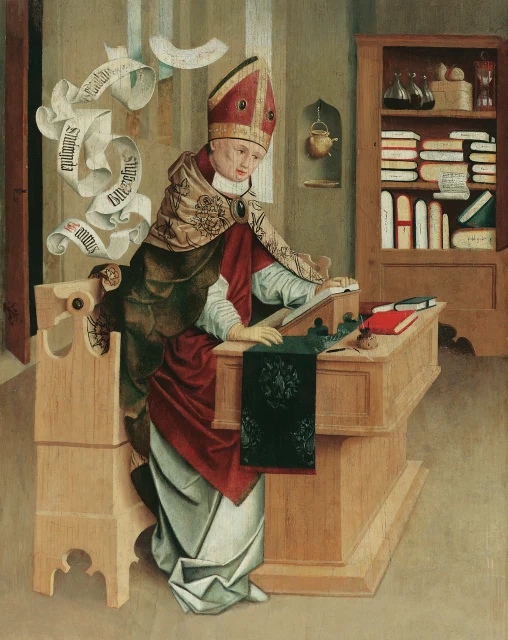
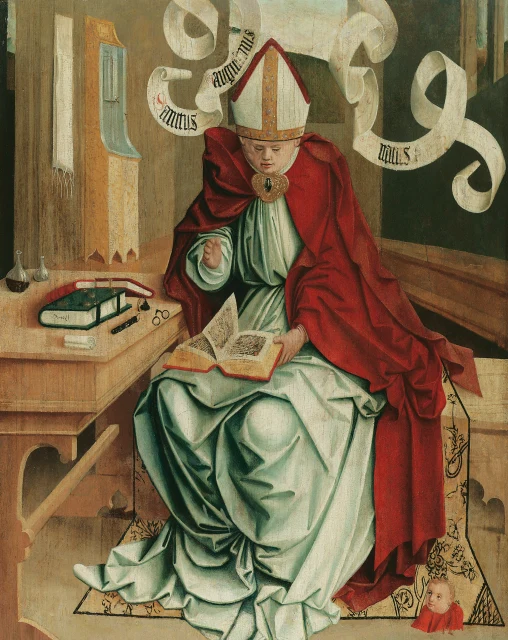
The altar was dismantled and sold before 1828. The Princes of Liechtenstein bought the paintings and later resold all but one, the Jesus in the Temple, which is still in their collection in Vaduz. Five panels by him are now in the Belvedere, among them the abbot's Madonna, the Circumcision, the Flight into Egypt and two Church Fathers, Ambrose and Augustine, while the Adoration of the Magi is in the state museum in Linz.