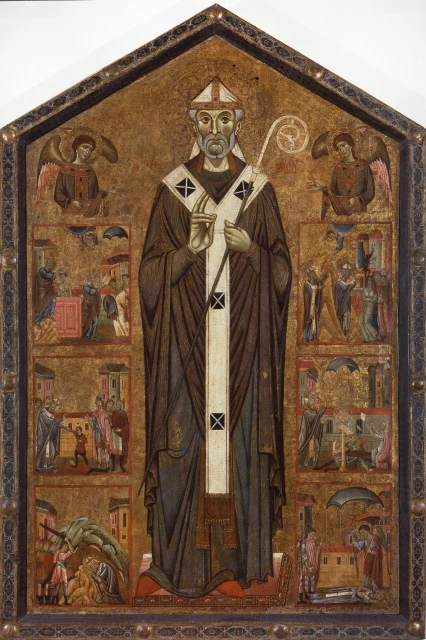
Master of San Verano
Republic of Pisa · Italo-Byzantine
The story
The name is a convenience of art history. It belongs to whoever painted one tall panel of Saint Veranus, a bishop of 6th-century Provence, made in Tuscany in the later 13th century for the parish church at Peccioli, in the hills south of Pisa. Museums are full of names like this one. The Master of San Torpè and the Master of the Blue Crucifixes are two more Pisan examples, invented because the pictures survive where the documents do not.
Signing was possible. Giunta Pisano put his own name on his painted crucifixes around the middle of the century. This painter left nothing to go on, and no second work has been securely joined to the Peccioli panel, so the whole artist amounts to a single object: 157 by 97 centimetres of tempera on wood, worked in the Byzantine manner that Pisa had taken in through its trade across the eastern Mediterranean.