Master of the Albrecht Altarpiece
Holy Roman Empire · Late Gothic
The story
Around 1437 an unknown painter made a huge altarpiece for the Carmelite church Am Hof, in the centre of Vienna, and he takes his name from it. The altar is named after Albrecht II, the Habsburg duke of Austria who became German king in 1438, because it was made in his reign. When restorers worked on the panels between 1962 and 1981, they found the coat of arms of a Viennese citizen, Oswald Oberndorffer, which points to him as the donor.
The altar had an eventful history. The Jesuits, who took over the church in the 16th century, painted Passion scenes over the panels of Carmelite history. Early in the 18th century it gave way to a Baroque altar, and in 1774 the wings went to the abbey of Klosterneuburg, just outside Vienna, where the restored altar stands today. Its 16 panels of angel choirs honouring the Virgin include some of the earliest realistic views of towers and buildings in Viennese painting.
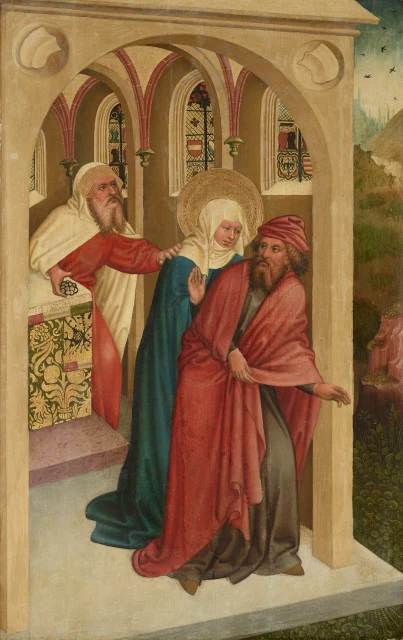
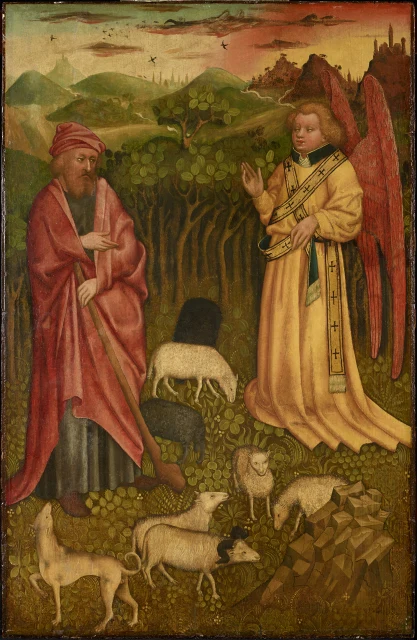
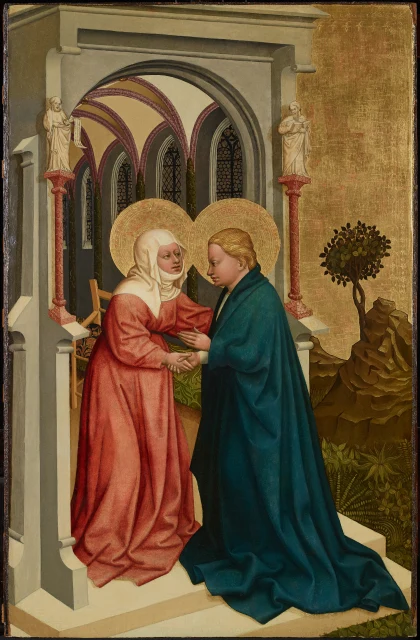
He belongs to a new, forceful realism in Viennese painting, with close attention to landscape and weather. The Belvedere holds separate panels by him, the Angel's Message to Joachim, the Rejection of Joachim's offering in the Temple and the Visitation, dated around 1435 to 1440. The Viennese painter Jakob Kaschauer has been proposed as the man behind the name, though this has never been confirmed.