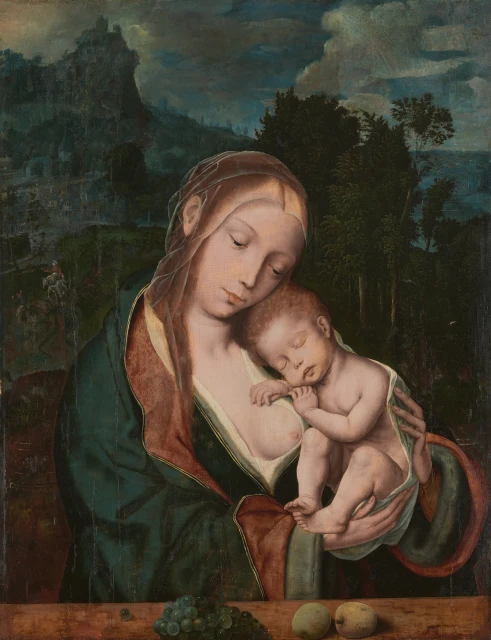
Master of the Mansi Magdalen
Netherlandish · Early Netherlandish
The story
This painter owes his name to one panel and to the scholar who spotted a pattern across several. In 1915 Max Friedländer, the great cataloguer of early Netherlandish painting, gathered a small group of pictures under a single unnamed hand and called him the Master of the Mansi Magdalen. The name comes from a painting of Mary Magdalene that had belonged to the Marchese Mansi of Lucca in Italy and long passed as a work of Quentin Matsys, the leading painter of Antwerp. It now hangs in Berlin.
That old mislabel points to something real. The Master worked in Antwerp in the first quarter of the 16th century, and his soft faces and crowded, merchant-world detail sit so close to Matsys that he may well have trained in his workshop. One proposal names him as Willem Meulenbroec, recorded in 1501 as a pupil of Matsys, though that stays a guess.
His surviving works are mostly devotional, Virgin and Child panels, holy families, the Magdalene herself, the kind of mid-size pictures Antwerp painted by the hundred for buyers across Europe.