Master of the Portraits of Princes
Burgundian Netherlands · Early Netherlandish painting
The story
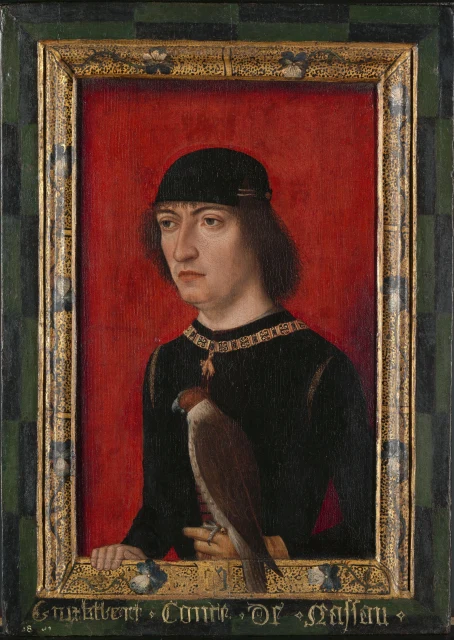
Nobody knows his name. In 1926 the German art historian Max J. Friedländer set one wing of a Brussels triptych of Christ's miracles, now in Melbourne, beside a handful of court portraits and decided that one hand had painted them all. He called that hand the Master of the Portraits of Princes, because the sitters were powerful men around the Burgundian and Habsburg court in the 1480s and 1490s.
The label stuck because the portraits share habits that are easy to spot once you know them. The sitter is turned three-quarters against a plain ground, the eyes are large and wide open with dark pupils, the head sits a little too big on the shoulders, and the ears disappear under the hair. Among the faces grouped under his name are Engelbert II of Nassau, in the Rijksmuseum, and Louis of Gruuthuse, the Bruges nobleman and book collector, in the Groeninge Museum in Bruges.
Scholars have tried to match him with a documented Brussels painter, among them members of the Van Coninxloo family and the manuscript illuminator Lieven van Lathem. None of these proposals has won general agreement, so the works still travel under the name Friedländer invented for them.