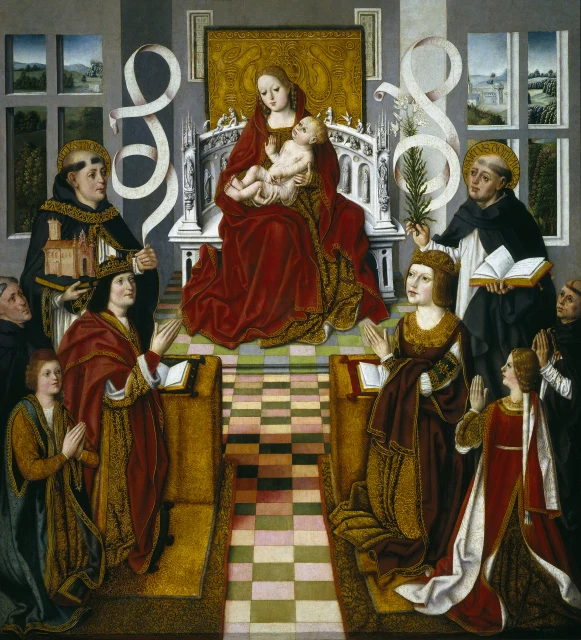
Master of the Virgin of the Catholic Monarchs
Crown of Castile · Hispano-Flemish, Late Gothic
The story
The label here reads like a description because that is what it is. Art historians call this a notname, a stand-in for a painter whose work is recognisable and whose name was never written down. It is a different thing from the hedging formulas museums also use. Follower of, workshop of, attributed to — each of those records a doubt about whose hand did the work. A notname says the hand is settled and only the name is missing.
The picture he is named after hangs in the Prado. Ferdinand and Isabella kneel with two of their children before the enthroned Virgin, Dominican friars behind them, one traditionally identified as Tomás de Torquemada, the Inquisitor General. It was painted between 1491 and 1493 for the royal quarters at the Real Monasterio de Santo Tomás in Ávila, in oil and tempera on panel, with the fine Netherlandish handling that gives Castilian painting of these years the name Hispano-Flemish.
Names have been proposed for him since the 19th century. Pedro Berruguete, who painted altarpieces for that same Ávila monastery, Michel Sittow, a Netherlandish-trained painter at Isabella's court, and the circle of the Salamanca painter Fernando Gallego have all been put forward, along with Diego de la Cruz and Maestro Bartolomé. None of the proposals has been accepted. The Prado compares the drawing found under the paint layer to Gallego's and stops there. Borrowed names like his are easy to confuse, and the Master of the Catholic Kings, with panels in Washington and Chicago, is a separate painter. No second picture has been securely given to this hand, so the one panel in Ávila's old royal oratory is the whole of his known work.