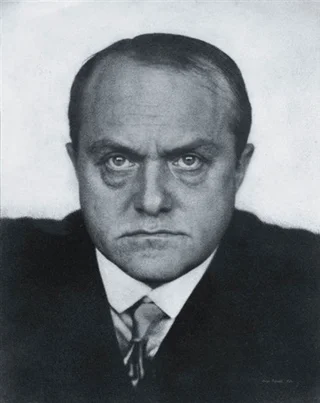
Max Beckmann
1884–1950 · Germany · Expressionism
The story
In July 1937 the Nazi government opened an exhibition in Munich called Entartete Kunst, "degenerate art," a display of confiscated modern paintings arranged to mock and humiliate the artists who had made them. Max Beckmann had works pulled from German museums and hung in that show. He left for Amsterdam the same day it opened and never lived in Germany again.
He had already been changed by one war. Beckmann volunteered as a medical orderly in World War I, and what he saw at the front, the wounded, the dead, the crowded field hospitals, broke his earlier, gentler style and pushed him toward the crowded, angular scenes he became known for, circuses, cabarets, and figures who stare straight out of the canvas at the viewer. Across his life he painted himself more than 80 times, in a sailor's stripes, in a tuxedo, in a butcher's coat, using his own face the way other painters used a hired model.
In Amsterdam he spent the occupation years working in near isolation, completing large triptychs dense with masked figures and private symbols he mostly declined to explain. He left for the United States in 1947, taught first in St. Louis and then in New York, and died on a Manhattan street in December 1950, walking to see one of his own paintings on view at the Metropolitan Museum.
Works
12 works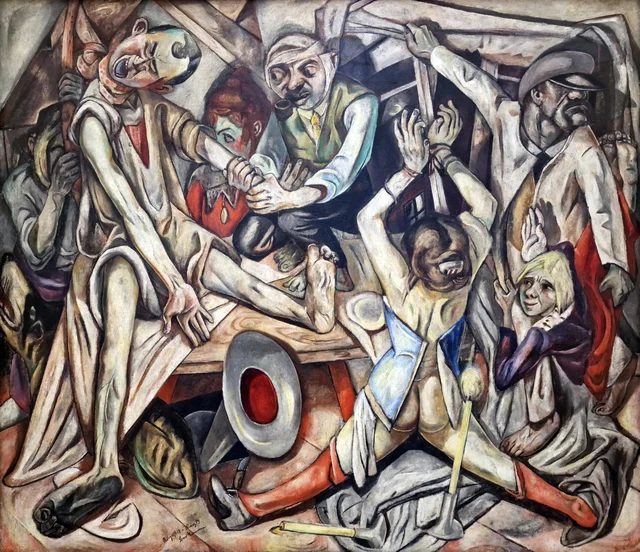 The NightMax Beckmann, 1918
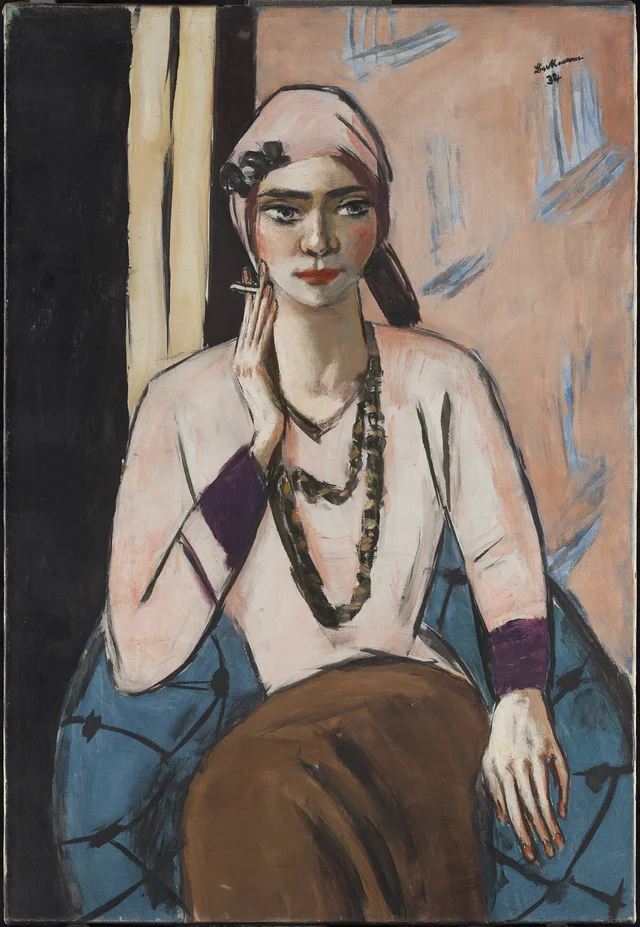 Quappi in a Pink JumperMax Beckmann, 1934
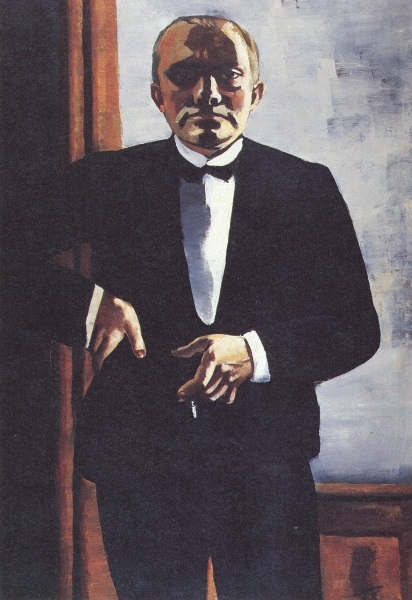 Self-Portrait in TuxedoMax Beckmann, 1927
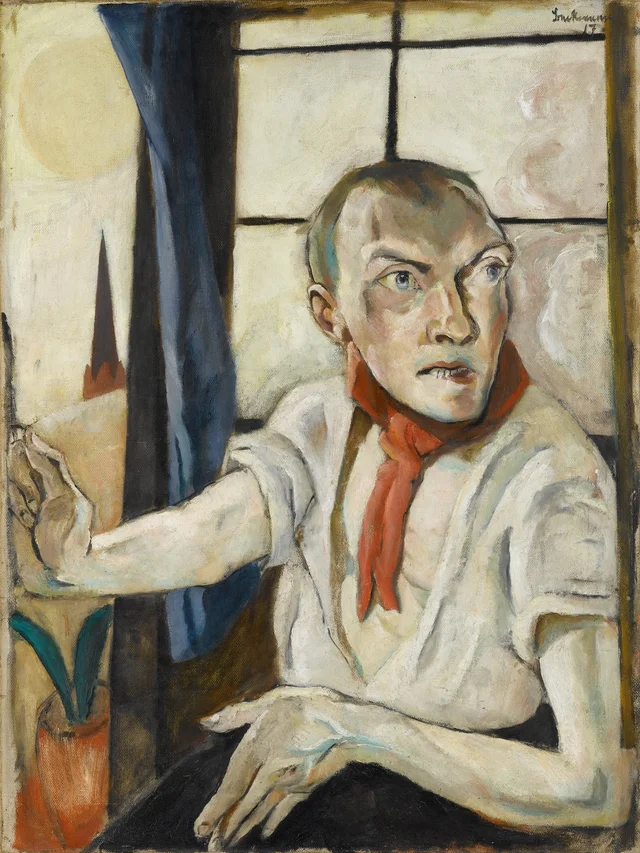 Self-Portrait with Red ScarfMax Beckmann, 1917
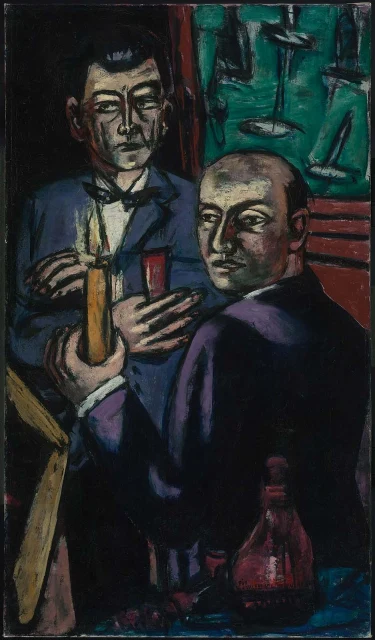 Double PortraitMax Beckmann, 1946
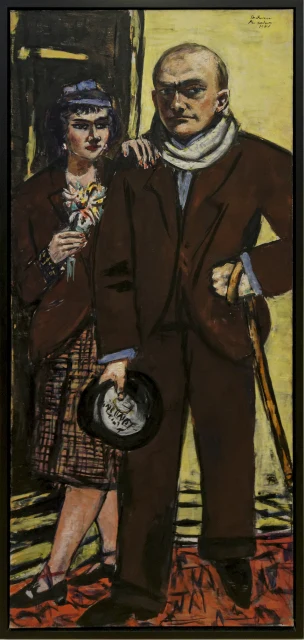 Double Portrait of the Artist and His Wife QuappiMax Beckmann, 1941
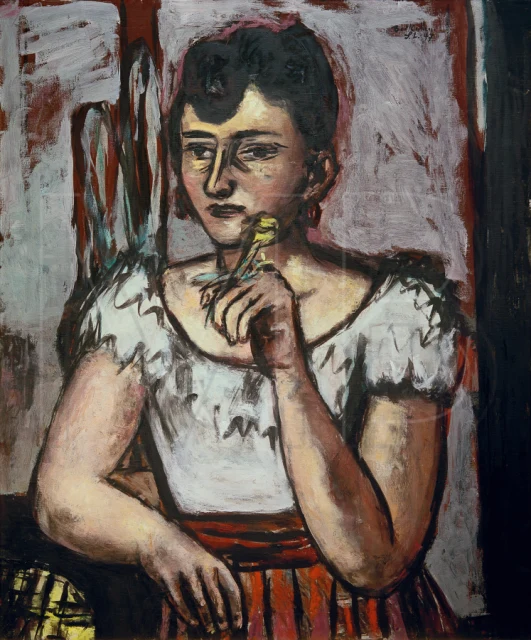 Euretta RathboneMax Beckmann, 1947
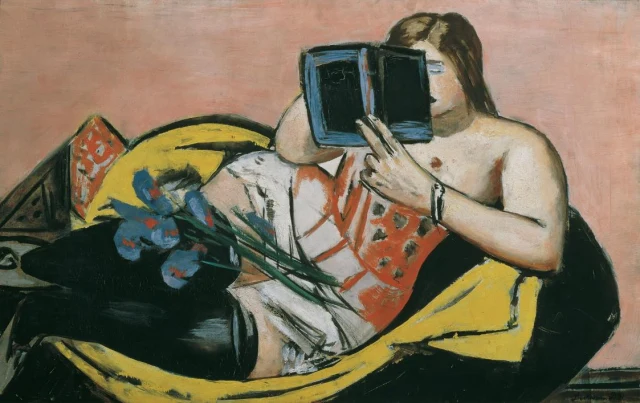 Reclining Woman with Book and IrisesMax Beckmann, 1931
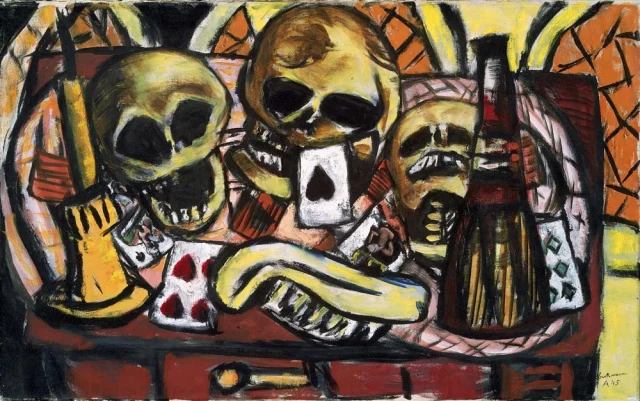 Still Life with Three SkullsMax Beckmann, 1945
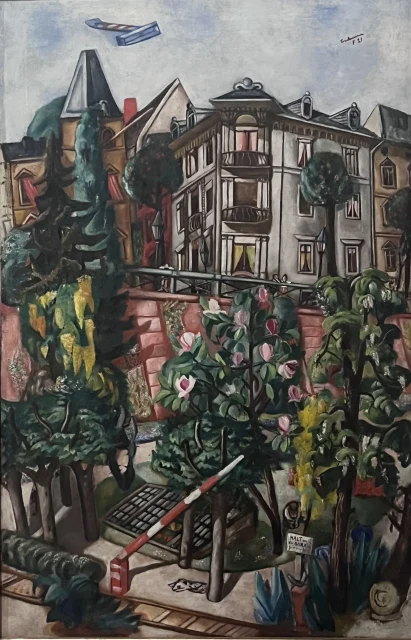 The Nizza in Frankfurt am MainMax Beckmann, 1921
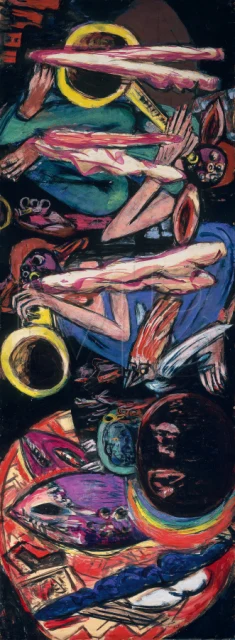 The TempestMax Beckmann, 1949