Maximilien Luce
1858–1941 · France · Pointillism
The story
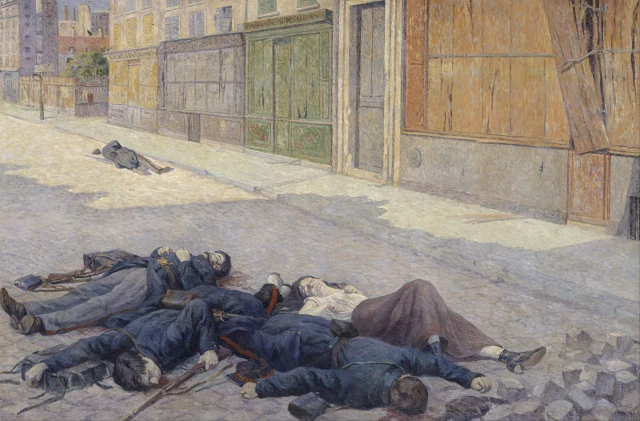
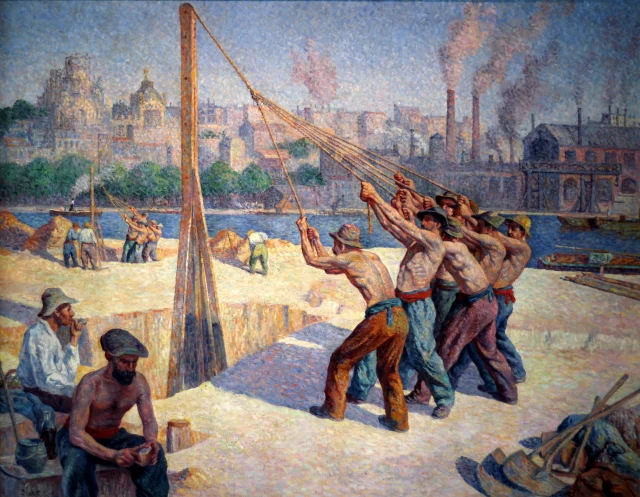
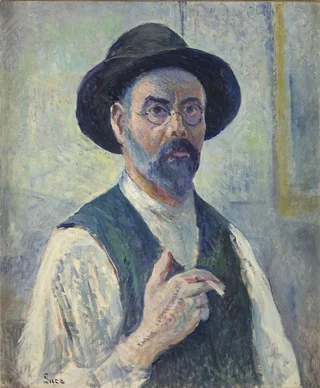
In the summer of 1894 a French painter spent 48 days in a Paris prison. Maximilien Luce had been swept up after the president of France, Sadi Carnot, was assassinated by an anarchist, and Luce made no secret of sharing those politics. The evidence against him was thin, he was acquitted, but the arrest fit the man. For 25 years he drew for anarchist newspapers, and his art kept its eye on working people.
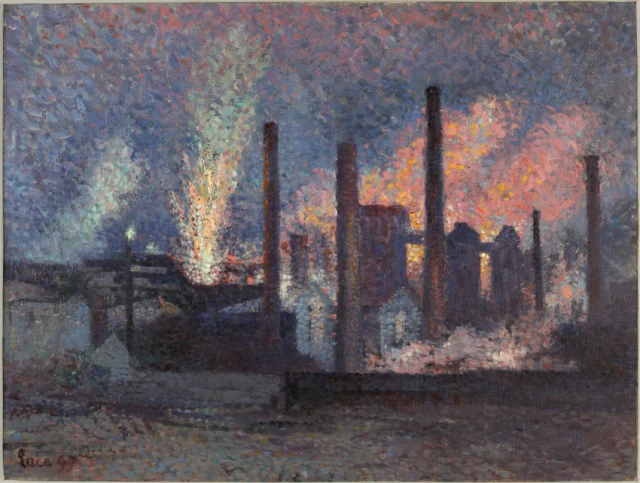
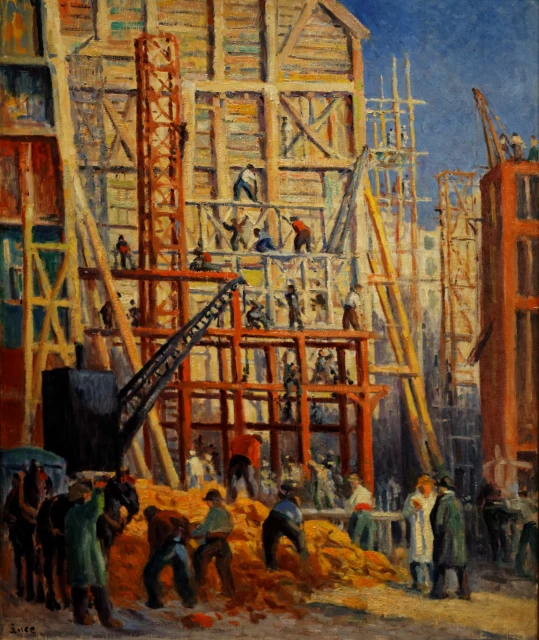
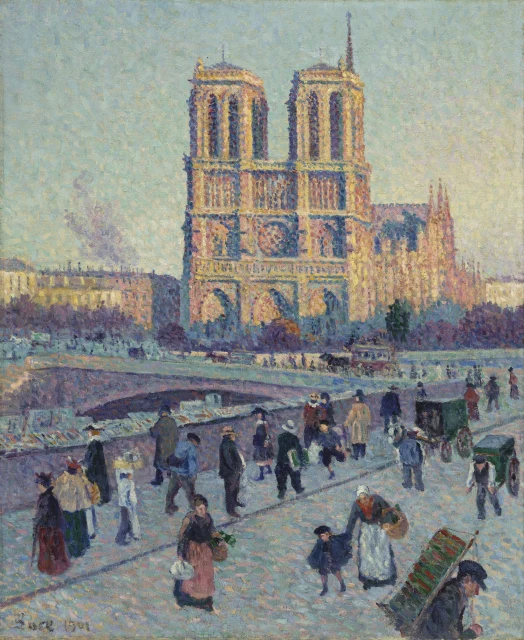
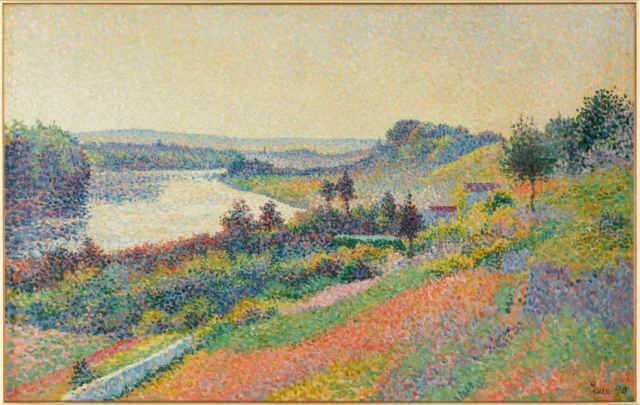
Luce had come up the hard way, apprenticed to a wood engraver at 14 and taking night classes to learn to paint. In 1887 he met Camille Pissarro, Georges Seurat and Paul Signac, the leading Neo-Impressionists, and adopted their method of building a picture from small separate dots of pure colour. Where they often painted leisure and coastline, he turned the technique on foundries, building sites and factories glowing at night.
Pissarro, an older painter who shared his beliefs, championed him. From about 1897 Luce loosened the strict dot technique for a freer, heavier stroke, and he kept painting the city and its labour into old age. He died in Paris in 1941, having served for a time as president of the Salon des Indépendants, the jury-free exhibition where he had first shown his work.