Meijer de Haan
1852–1895 · Kingdom of the Netherlands · Pont-Aven School, Cloisonnism
The story
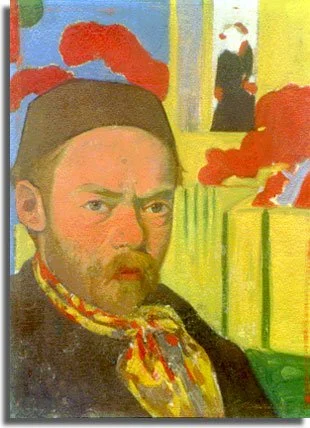
In the winter of 1889, in a seaside inn on the Breton coast at Le Pouldu, two painters shared a dining room they had covered floor to ceiling with their own murals. One was Paul Gauguin. The other was Meijer de Haan, a Dutchman from a wealthy Amsterdam family of Jewish bakers, and it was de Haan's money that paid for the food, the lodging and the paint.
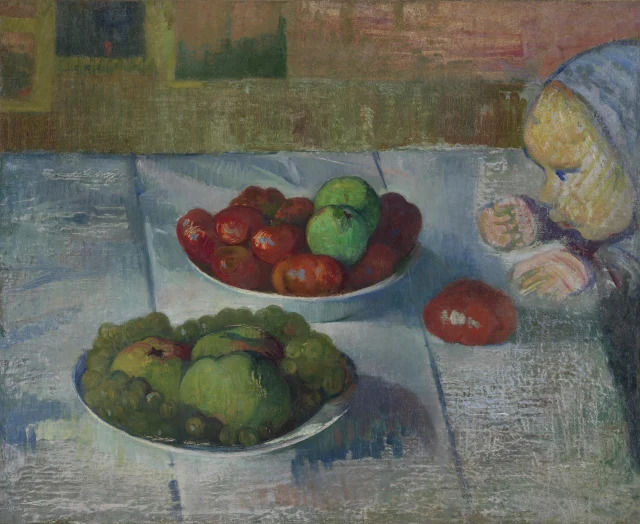
De Haan had come to France in 1888 already bruised. For 10 years he had labored over a large canvas on the Jewish philosopher Uriel Acosta, certain it would be his masterpiece. Its cool reception in Amsterdam sent him abroad. In Paris he lodged with Theo van Gogh, in the room Vincent had just left, then followed Gauguin to Brittany as pupil and patron at once. Under Gauguin his still lifes and landscapes loosened into flat, saturated color close to Cezanne.
At the inn he also fell for Marie Henry, the young woman who ran it. She bore his daughter in 1891, but de Haan's family cut off his allowance and he returned to Amsterdam, where he died in 1895 at 43. He left every painting he had made in France to Marie Henry. Gauguin kept painting him for years, sometimes as a red-haired imp with a fox at his side.