Melchior Broederlam
1355–1410 · Southern Netherlands · Early Netherlandish painting
The story
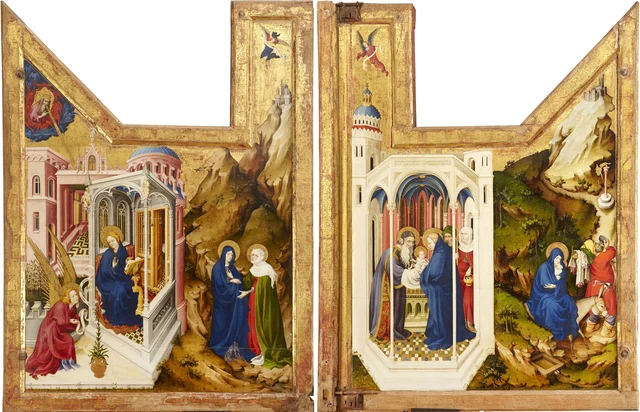
Almost everything Melchior Broederlam made is gone, and his name survives on the strength of a single object: the painted wings of an altarpiece now in Dijon, in eastern France. He came from Ypres, in Flanders, and by 1391 he was court painter to Philip the Bold, Duke of Burgundy, one of the richest men in Europe, a post that also made him a valet de chambre, a servant close to the duke's person.
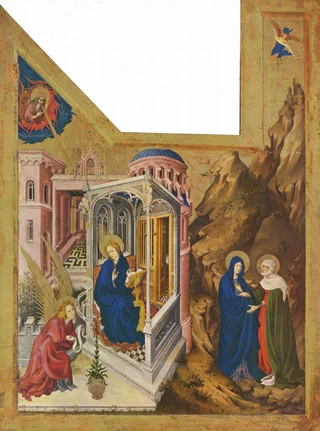
Philip was building a Carthusian monastery at Champmol, just outside Dijon, as the place his family would be buried. For it Broederlam took a carved and gilded altarpiece by the sculptor Jacques de Baerze and painted its two outer shutters, working from about 1394 to 1399. On them are four scenes from the life of the Virgin Mary and the infant Christ, the Annunciation and Visitation on one side, the Presentation in the temple and the Flight into Egypt on the other, all set against gold, delicate architecture and the first hints of real landscape.
Historians treat him as the most important painter in the Low Countries in the generation just before Jan van Eyck, whose oil technique would soon change everything. Broederlam is last recorded alive in 1409.