Michiel van Musscher
1645–1705 · Dutch Republic · Baroque
The story
In 1687 Michiel van Musscher painted Thomas Hees, a Dutch diplomat who had represented the States General, the Republic's governing assembly, in Algiers, Tunis and Tripoli, where he negotiated the release of Dutch sailors held as slaves. Hees sits at a table in Turkish trousers with a long pipe, his two nephews bring him a letter and a tobacco jar, and behind him stands Thomas, the African servant Hees had bought, barefoot and with an iron band around his neck. The painting hangs in the Rijksmuseum.
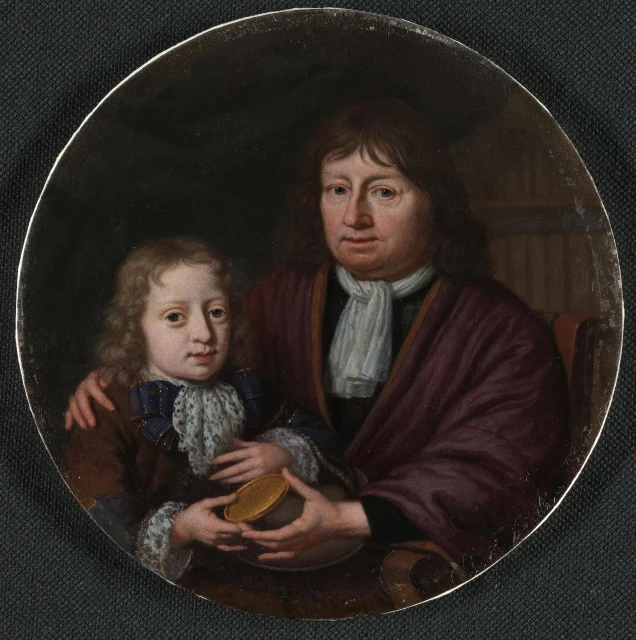
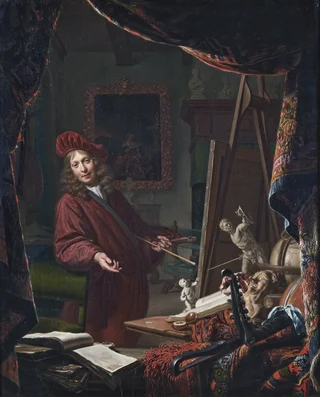
Portraits of wealthy Amsterdammers in richly furnished rooms, with carpets, maps and books, were Van Musscher's speciality. He was born in Rotterdam in 1645 and studied with several masters for short spells, among them Gabriel Metsu, the painter of elegant Amsterdam interiors, and Adriaen van Ostade, known for his tavern and peasant scenes. The biographer Arnold Houbraken, who wrote the lives of the Dutch painters, was astonished at how much he achieved with so little formal teaching.
In Amsterdam the wealthy patron Jonas Witsen helped launch him as a portraitist, and he went on to paint the city's burgomasters and scholars, among them the mathematician Johannes Hudde, burgomaster of Amsterdam, in 1686. Van Musscher died in Amsterdam in June 1705 and was buried in the Nieuwe Kerk, the church on the Dam.