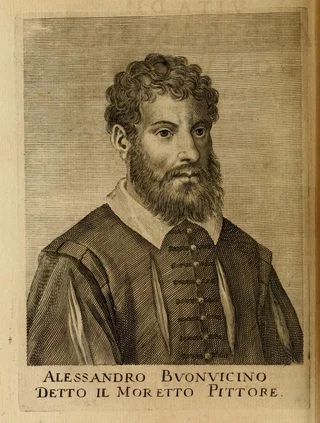
Moretto da Brescia
1554 · Republic of Venice · High Renaissance
The story
Around 1526, a painter in the northern Italian city of Brescia did something no Italian artist is known to have done before. Moretto da Brescia, born Alessandro Bonvicino, painted a life-size man standing full-length, alone, in his own portrait, with no saint or story to justify the scale. The picture now in London's National Gallery is held to be the earliest surviving standing portrait of its kind in Italian art, made before Titian tried the same thing.
Moretto spent almost his whole life in Brescia, then part of the Venetian Republic, filling its churches with calm, silvery altarpieces. He had absorbed the warm colour of nearby Venice, but kept a sober, north-Italian plainness that suited his devout patrons.
His deepest mark on later art came through a pupil. The young Giovanni Battista Moroni trained in his workshop and carried the full-length portrait forward into one of the great runs of portraiture of the century. The identity of that first standing sitter is still uncertain. An old tradition links him to the Avogadro family of Brescia, whose members Moroni would later paint in the same commanding pose.
Works
12 works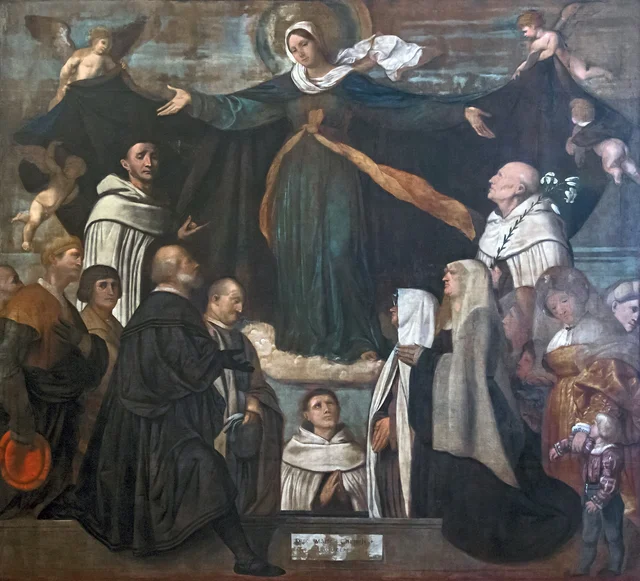 The Virgin of CarmelMoretto da Brescia, 1522
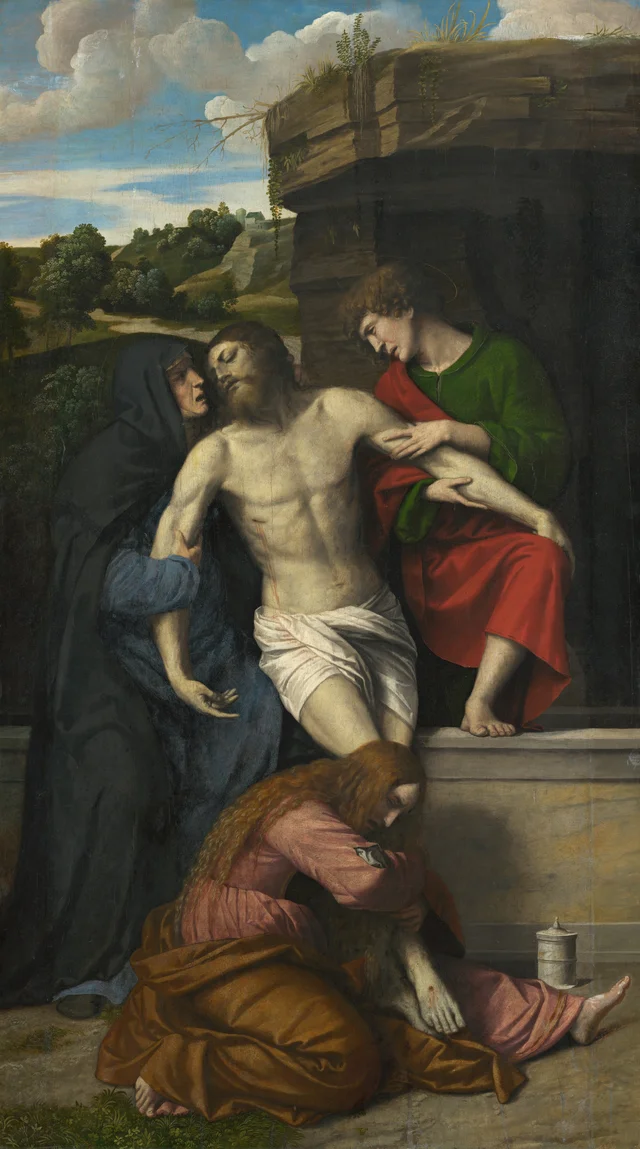 Entombment of ChristMoretto da Brescia, 1526
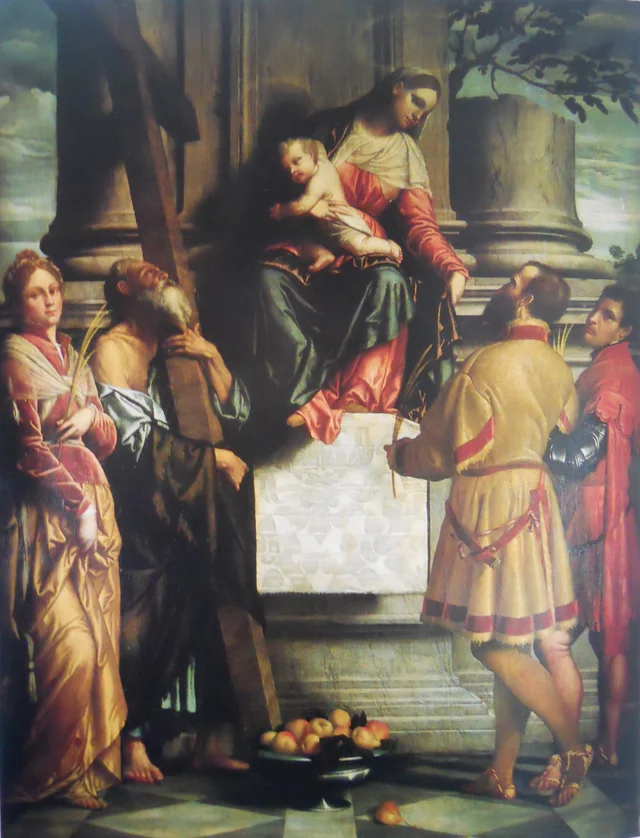 Madonna enthroned with child with saintsMoretto da Brescia, 1536
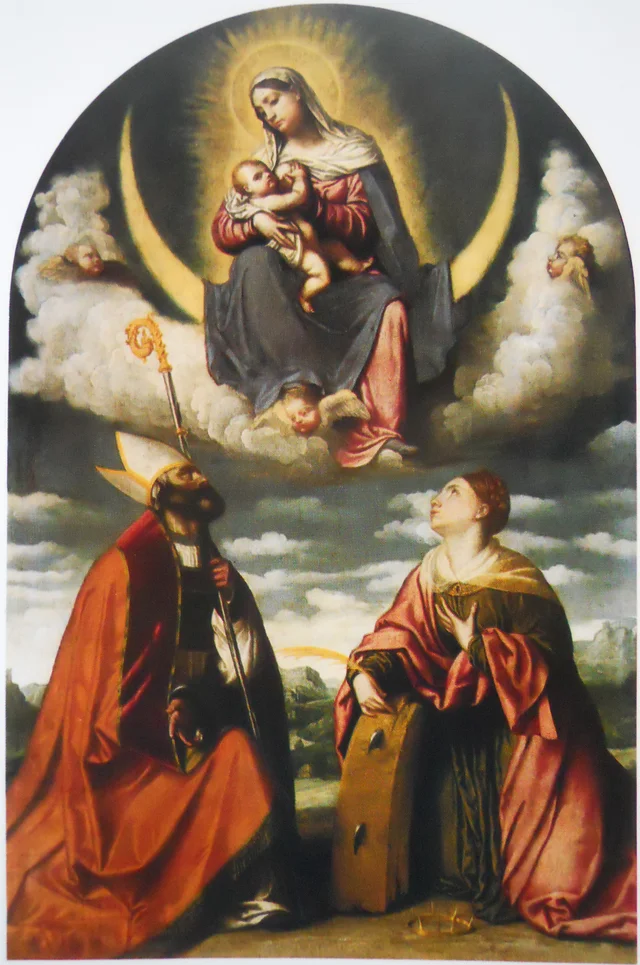 Madonna with child in glory with Saints Martin and CatherineMoretto da Brescia, 1530
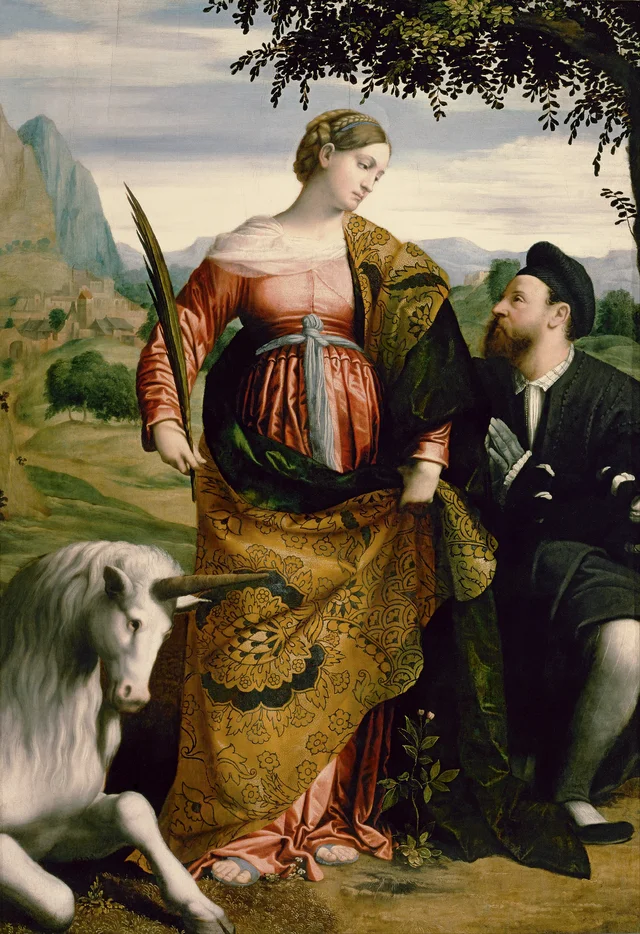 Saint Justina with the Unicorn, Venerated by a PatronMoretto da Brescia, 1530
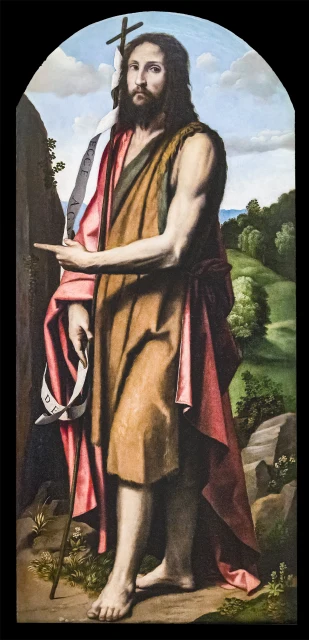 John the BaptistMoretto da Brescia, 1530
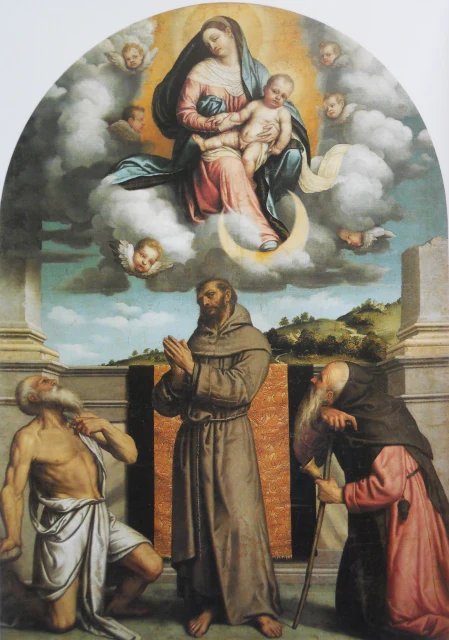 Madonna in Glory with the Christ Child, St. Jerome, St. Francis and St. Anthony the AbbotMoretto da Brescia, 1543
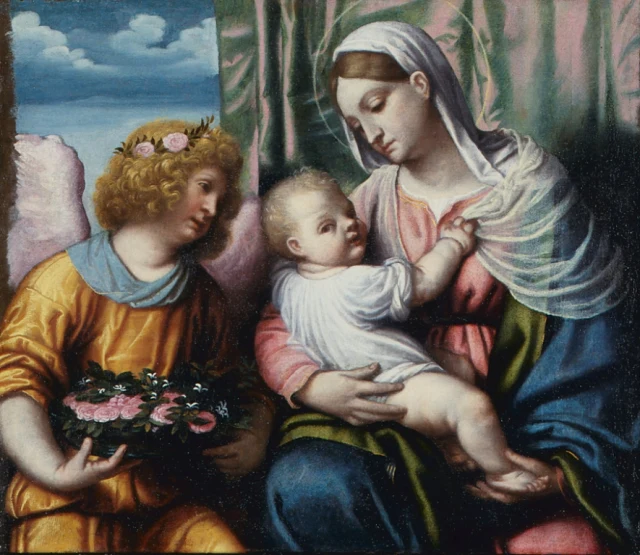 Madonna with Child and an AngelMoretto da Brescia, 1545
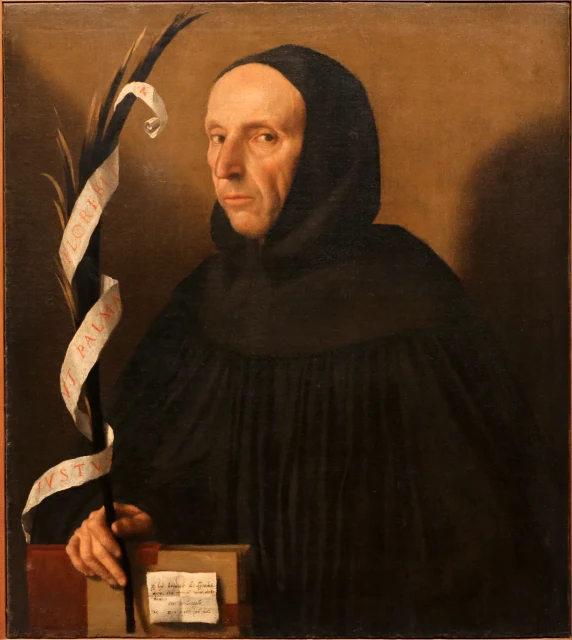 Portrait of a Franciscan Friar (formerly called Savonarola)Moretto da Brescia, 1524
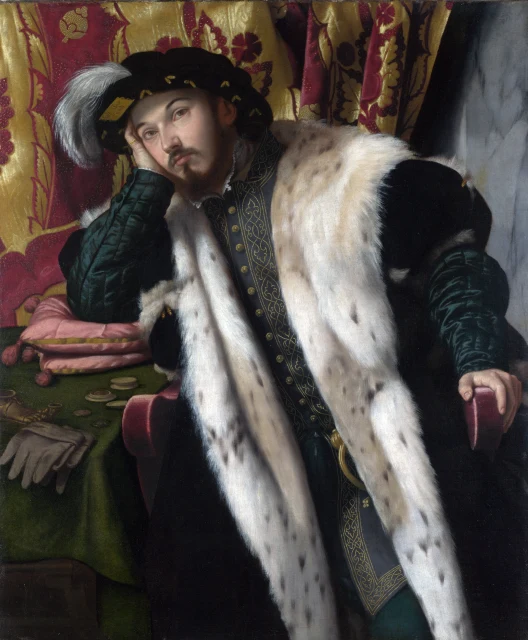 Portrait of Count Fortunato MartinengoMoretto da Brescia, 1542
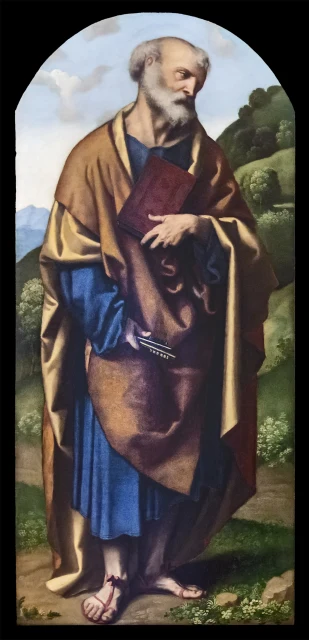 Saint PeterMoretto da Brescia, 1530
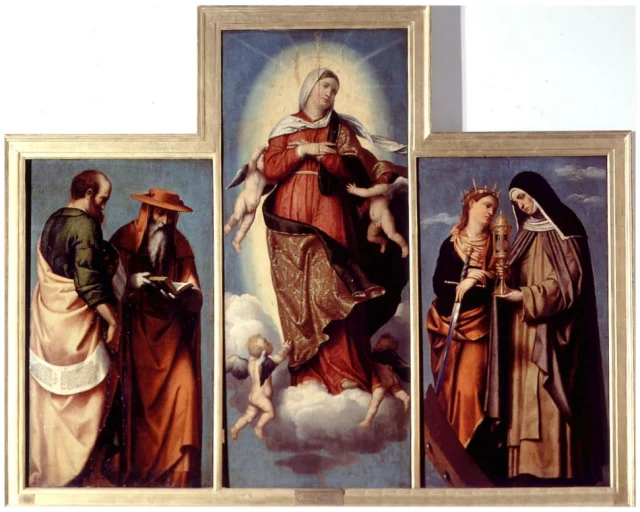 The Assumption of the Virgin with St. Mark and St. Jerome, St. Catherine of Alexandria and St. ClareMoretto da Brescia, 1529