Moyses van Wtenbrouck
Dutch Republic · Dutch Golden Age, Italianate landscape painting
The story
Constantijn Huygens, secretary to the Prince of Orange and a keen judge of painting, praised Moyses van Wtenbrouck in the autobiography he wrote around 1630. By then Wtenbrouck was among the painters working for Stadtholder Frederick Henry, and his pictures hung in the prince's houses in and around The Hague, among them the palace of Honselaarsdijk.
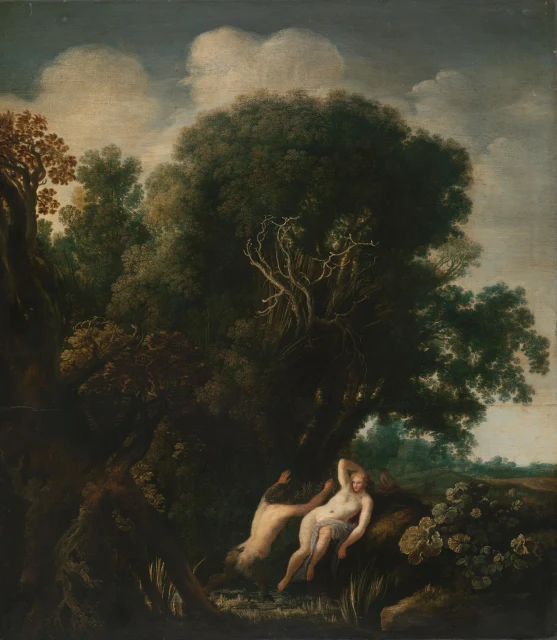
His speciality was an invented countryside. Nymphs, shepherds, satyrs and figures from the Bible and from Ovid gather in shaded valleys among gnarled trees and old ruins, all of it painted in The Hague by a man for whom no journey to Italy has ever been documented. In the 1620s his figures owe a good deal to Pieter Lastman, the Amsterdam history painter who taught Rembrandt. Later his landscapes turn softer and more golden. He was an etcher too, and his earliest dated print is from 1615.
He joined the Hague painters' guild in 1620 and was its dean seven years later. His birth can only be placed somewhere between 1590 and 1600, and his death between 1645, when a document still mentions him alive, and 1647.