Muqi
1210–1280 · Southern Song dynasty, Song dynasty · Chan painting, Ink painting, Buddhist art
The story
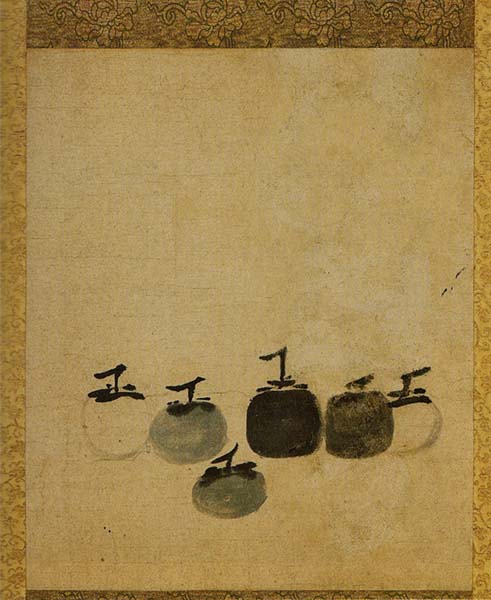
Six pieces of fruit sit in a row on empty paper, some inked solid black, some left as pale outlines, and that is the whole picture. It is called 'Six Persimmons', and it was painted in the 13th century by Muqi, a Chan Buddhist monk in southern China in the last years of the Southern Song dynasty, before the Mongols swept it away.
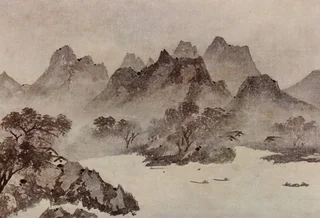
Muqi painted the way Chan practice prized, fast and spare, in a few decisive strokes of black ink, letting the empty paper carry as much weight as the marks. In China his loose, spontaneous manner was not always admired by refined collectors, who preferred careful brushwork. In Japan it was treasured. Zen monks and tea masters ranked his work above almost anything, and much of what survives left China centuries ago.
'Six Persimmons' has hung for more than 400 years in a sub-temple of Daitokuji, a great Zen monastery in Kyoto, where it was used at the tea ceremony and shown only rarely. Because so little of his life was ever recorded, the paintings kept in Japan are most of what we know of him at all.