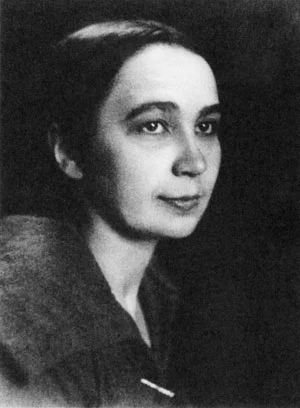
Natalia Goncharova
1881–1962 · Russian Empire · Rayonism
The story
Natalia Goncharova took the roughness of Russian peasant art and pushed it into the front rank of European modernism. Born on a country estate in 1881, she filled her early canvases with harvesters, laundresses and religious images painted in the bold, flat manner of icons and painted shop signs, a deliberate turn away from Paris toward Russia's own visual roots.
With her lifelong partner Mikhail Larionov she then launched Rayonism around 1912, an attempt to paint the rays of light that objects throw off rather than their solid shapes, one of the first Russian ventures into near-abstraction. Her religious paintings scandalised the censors, who found it improper for a woman to paint saints, and one of her exhibitions was briefly seized by the police.
In 1915 the impresario Sergei Diaghilev drew her west to design for the Ballets Russes, and her blazing sets and costumes for the opera-ballet The Golden Cockerel made her name across Europe. She settled in Paris with Larionov and stayed for the rest of her life, working into her seventies in a small crowded apartment where the couple finally married in 1955, after decades together.