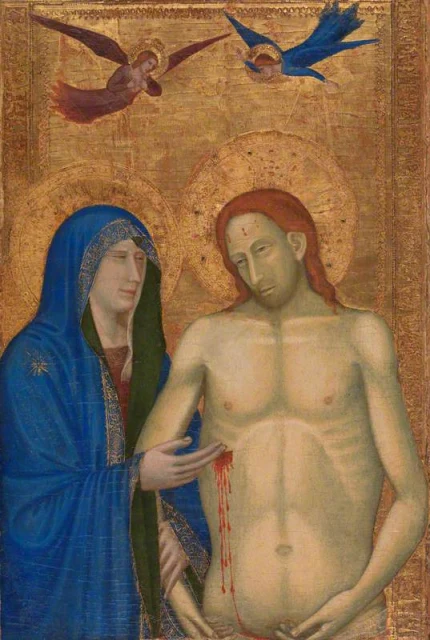
Neapolitan follower of Giotto
Kingdom of Naples · Proto-Renaissance
The story
In 1328 Robert of Anjou, king of Naples, called the Florentine painter Giotto to his court, and Giotto stayed there into the early 1330s. With his assistants he painted frescoes for the royal church of Santa Chiara and for the chapel of the king's castle, most of which have since been lost.
Neapolitan follower of Giotto is the name museums give to a painter from that circle whose own name has not come down to us. He learned Giotto's broad, heavy figures in Naples, and the panels given to him are dated to the 1330s and 1340s, so he probably went on working in that manner after the master left. The name is a grouping by style, and it is not settled that every panel under it is by one person. In London the National Gallery uses it for a small devotional panel, and the Metropolitan Museum in New York uses the same name for several of its own pictures, among them an Adoration of the Magi.