Nicolas Tournier
1590–1639 · County of Montbéliard, Kingdom of France · Caravaggisti
The story
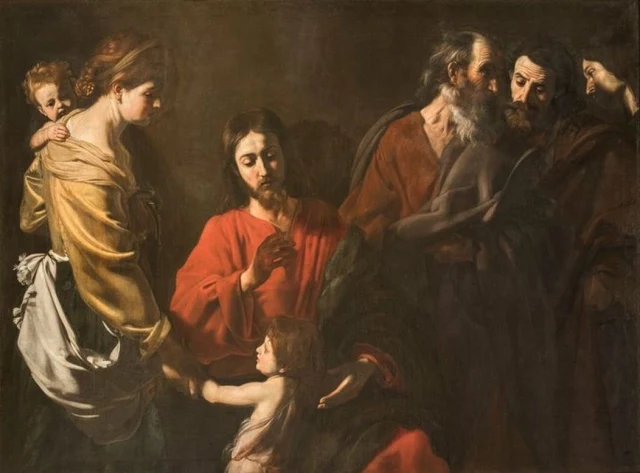
For a long time Nicolas Tournier's Roman paintings went under the name of Valentin de Boulogne, a better-known French follower of Caravaggio. A canvas dated 1655 and signed Fournier, read as his name, even led historians to believe he was still alive that year. The documents tell a shorter story. He was baptised on 12 July 1590 in Montbéliard, a Lutheran county then ruled by a branch of the house of Württemberg, the son of André Tournier, a Protestant painter from Besançon.
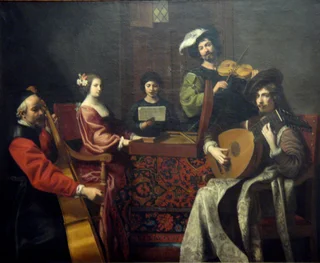
By 1619 he was in Rome, listed in the yearly parish censuses kept by the clergy, and he stayed until 1626. His pictures of those years, drinkers, musicians and gospel scenes in half length, are close to Bartolomeo Manfredi, the Italian painter who turned Caravaggio's tavern scenes into a manner that many foreigners in Rome took up.
He then went to the south-west of France, to Carcassonne by 1627 and Toulouse by 1632, and painted altarpieces for the churches of Languedoc. Several are now in the Musée des Augustins in Toulouse, among them a battle of the emperor Constantine at the Red Rocks. On 31 December 1638, ill, he made his will in the Toulouse house where he lodged, and he died a few days later.