Nikolai Ge
1831–1894 · Russian Empire · Russian symbolism
The story
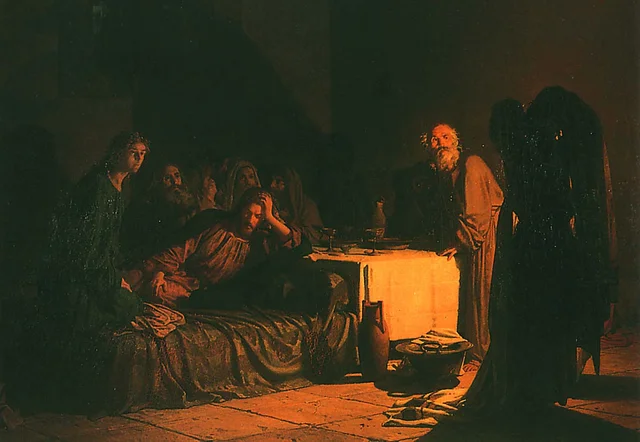
Nikolai Ge spent his last years painting the Passion of Christ in a way that outraged church and state alike. In 1890 he showed What Is Truth, the moment when Pilate, the Roman governor, sneers his famous question at Jesus. Ge painted Pilate as a well-fed official in the light and Christ as a gaunt, exhausted prisoner in shadow, nothing divine about him.
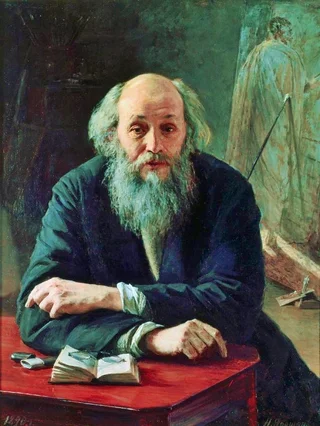
The Holy Synod had the painting pulled from the exhibition as blasphemous. One man defended it loudly, the writer Leo Tolstoy, who had become Ge's close friend and moral guide, and who called it the truest image of Christ he knew. Under Tolstoy's influence Ge had turned his back on official art and gone to live simply on a farm in Ukraine.
He had begun his career very differently, with grand, admired historical scenes like Peter the Great questioning his son. The raw, rough, almost violent religious paintings of his old age puzzled his contemporaries and were often refused exhibition. He died on his farm in 1894, and several of those late canvases now hang in the Tretyakov Gallery in Moscow.