Nikolaos Doxaras
1710–1775 · Republic of Venice · Heptanese school, Rococo
The story
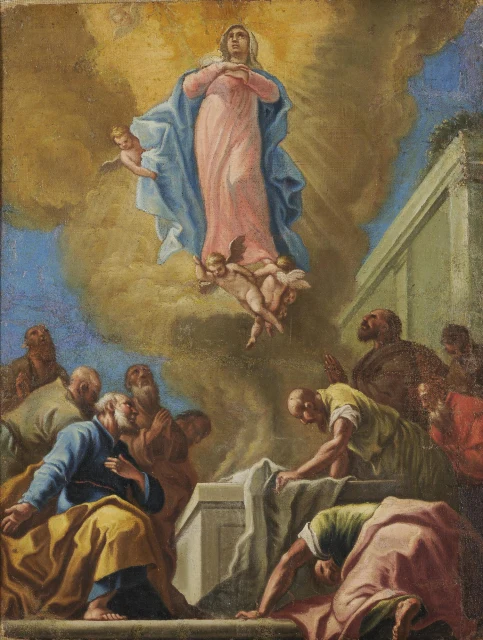
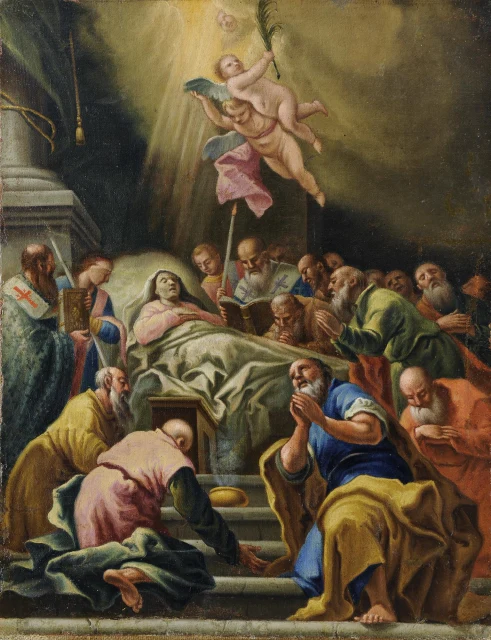
In 1753 the church of Panagia Faneromeni in Zakynthos gave its ceiling to Nikolaos Doxaras. Where an Orthodox church would normally show Christ Pantokrator overhead, he painted the Virgin instead, her birth, her death and her assumption into heaven, following the models Roman Catholic churches were using at the time. The Ionian islands were Venetian territory then, and that borrowing from the West ran in the family.
He was born in Kalamata in 1710, during the short Venetian hold on the Peloponnese, and the family left for the islands after the Ottomans took the peninsula back in 1715. His father, Panagiotis Doxaras, had translated Leonardo's treatise on painting into Greek and published his own book on painting in 1726, arguing that Greek painters should learn from Venice and drop the Byzantine manner. Panagiotis died in 1729, which is the simplest way to keep the two apart: everything at Faneromeni is the son's.
Nikolaos went to Venice after his father's death to study painting and military engineering, and spent much of his life as an officer in Venetian service on Corfu, Lefkada and Zakynthos, painting between postings. His pupil Nikolaos Koutouzis carried the family's western manner into the next generation of island painters.
The Faneromeni ceiling came down in the earthquakes that levelled Zakynthos town in 1953 and the fire that followed. The few fragments saved are in the Byzantine Museum on the island. Athens holds small canvases of his, about 45 by 34 centimetres, with the same subjects he once put above that congregation's heads — the Dormition and the Assumption of the Virgin.