Noè Bordignon
1841–1920 · Italian · Realism
The story
Noè Bordignon painted the everyday life of the Veneto countryside he came from, born in 1841 in Salvarosa, a hamlet near Castelfranco Veneto on the mainland behind Venice. He trained at the Venetian Academy under Michelangelo Grigoletti, a respected history painter, and in 1865 won a stipend that took him to Rome.
Back in Venice he opened a studio in 1869 and worked the vein of genre painting then popular in the city, scenes of children, peasants and small daily incidents, alongside contemporaries like Giacomo Favretto. A close friendship with Tranquillo Cremona, a leader of the Milanese Scapigliatura who painted with soft, dissolving edges, left its trace in his looser handling of light.
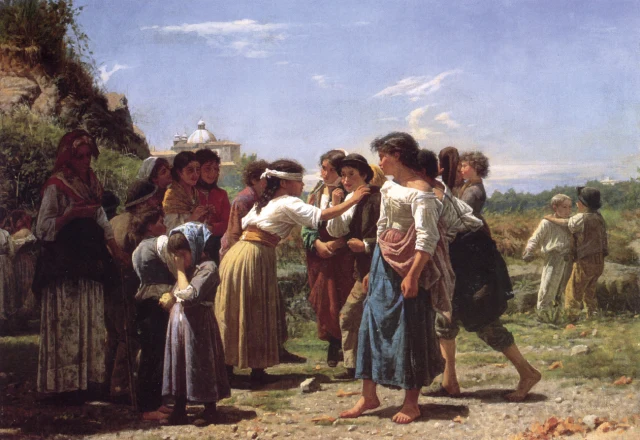
He painted frescoes and altarpieces as well, and lived into old age in the hills, dying in 1920 at San Zenone degli Ezzelini. One of his best-known canvases, La mosca cieca, a game of blind man's buff painted around 1874, hangs in the Accademia in Venice.