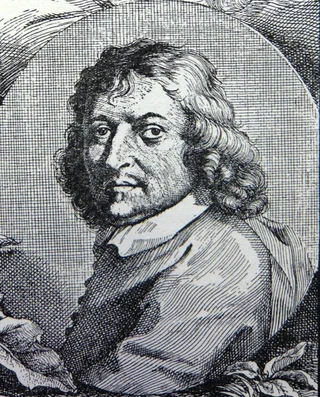
Otto Marseus van Schrieck
1619–1678 · Dutch Republic · Baroque
The story
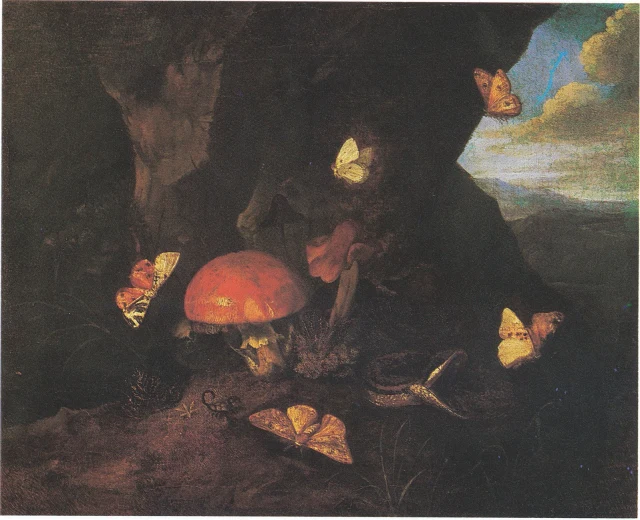
In the Dutch Golden Age of the 1600s, still-life painters mostly set out gleaming tables, cut flowers, and polished silver. Otto Marseus van Schrieck got down onto the forest floor. He invented a whole genre the Italians called sottobosco, the undergrowth: dark tangles of weeds and mushrooms alive with snakes, toads, lizards, moths, and beetles, lit as if you had just turned over a rotten log.
To paint them he studied from life. Near Amsterdam he kept a garden stocked with live reptiles and insects, a working menagerie for an artist who wanted his creatures exactly right. Years earlier, among the Dutch painters in Rome, his colleagues had nicknamed him the Snuffelaer, the Sniffer, because he was forever poking about after snakes and strange plants.
His odd, crawling pictures found powerful admirers in Florence, where Grand Duke Ferdinando II de' Medici and his brother Cardinal Leopoldo collected them eagerly. That taste is why the largest group of his paintings still survives in Florence today, in the old Medici holdings that fed the Uffizi.