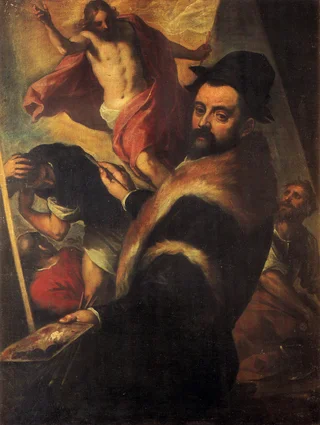
Palma il Giovane
1628 · Republic of Venice · Mannerism
The story
In 1576 the plague swept Venice and killed the aged Titian, the city's greatest painter, before he could finish the large Pietà he had been working on, some think for his own tomb. The unfinished canvas passed to a younger Venetian, Jacopo Palma, called il Giovane, the Younger, to tell him apart from his great-uncle, a painter of the same name. Palma completed it, and in an inscription he added he wrote that he had finished what Titian left undone and dedicated the work to God.
Palma had trained partly in Rome and come home to a Venice whose giants, Titian, Tintoretto and Veronese, were dying off one by one. He absorbed their manner, especially Tintoretto's twisting figures and Titian's loose, loaded brush, and after their deaths he had the field largely to himself.
For half a century he was the busiest painter in the city, filling Venetian churches and the Doge's Palace with large religious and historical canvases. He worked so constantly, and drew so much in preparation, that his surviving drawings alone are counted in the thousands.
Works
7 works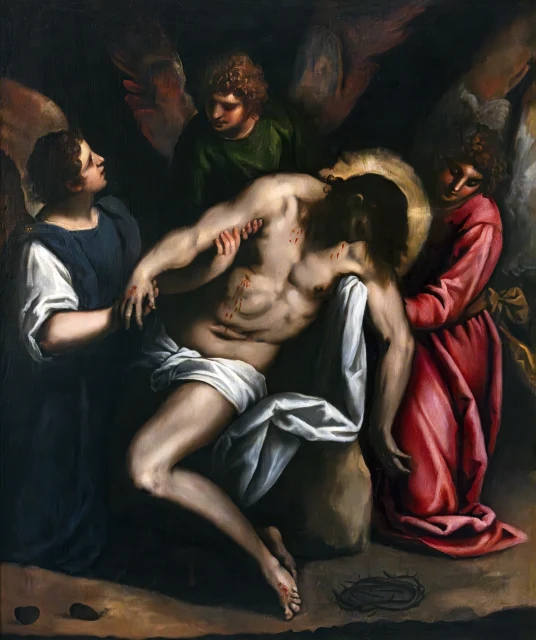 Dead Christ Supported by Three AngelsPalma il Giovane, 1612
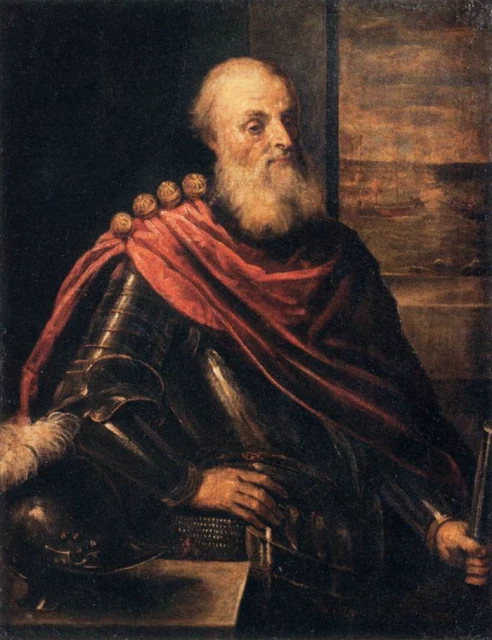 Portrait of Vincenzo CappelloPalma il Giovane, 1587
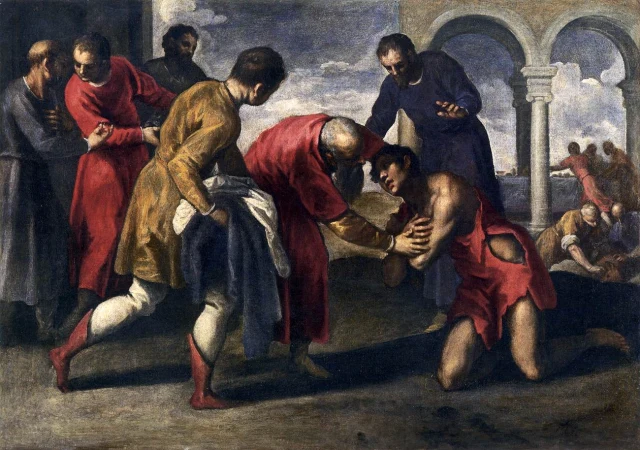 Return of the Prodigal SonPalma il Giovane, 1597
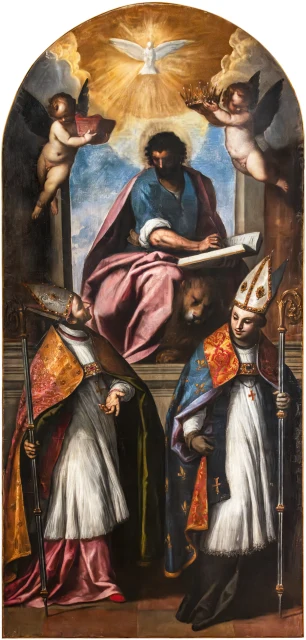 Saint Mark Enthroned with saints Charles Borromeo and Louis of ToulousePalma il Giovane
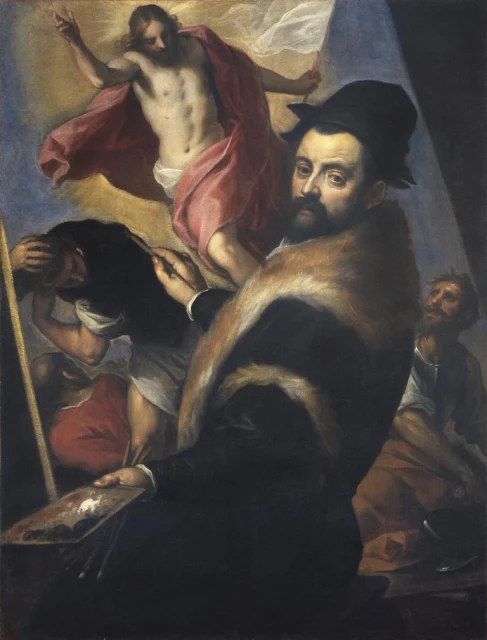 Self-PortraitPalma il Giovane, 1582
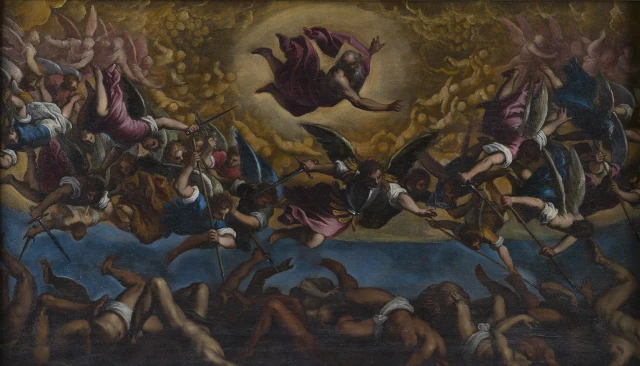 The Fall of LuciferPalma il Giovane
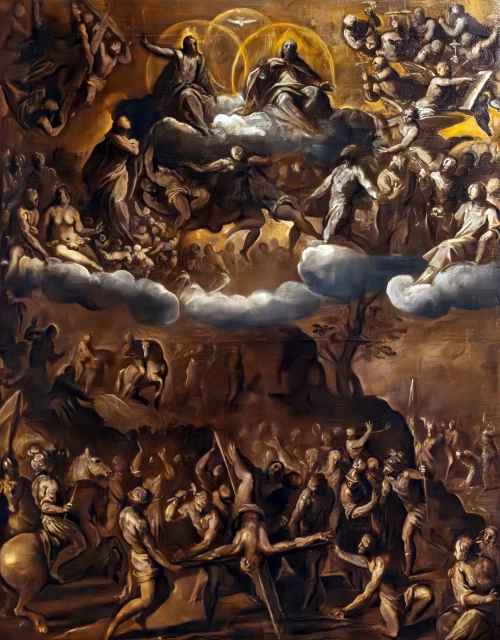 The Trinity in Glory and the Martyrdom of Saints Peter and PaulPalma il Giovane, 1614