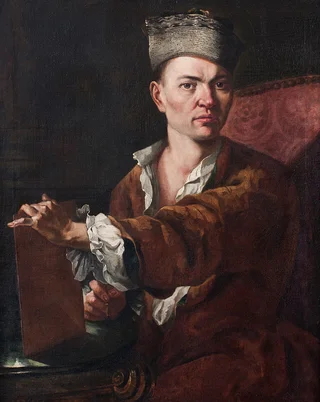
Paul Troger
1698–1762 · Holy Roman Empire · Baroque
The story
In the Vienna of the late 1720s the big ceilings went to two established painters, Johann Michael Rottmayr and Daniel Gran, and a newcomer from the Tyrol found little room. Paul Troger looked instead to the great abbeys of Lower Austria, which were rebuilding in grand style, and they kept him busy for most of his career.
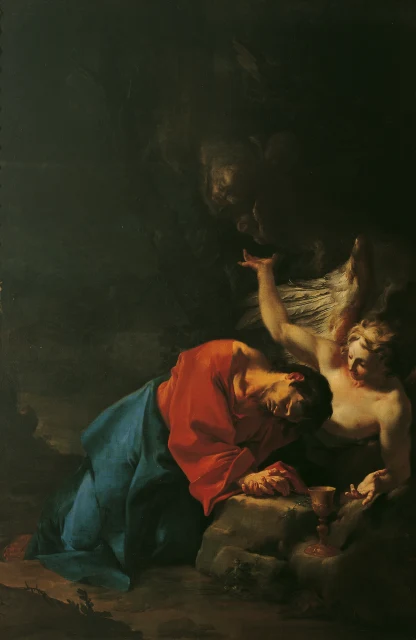
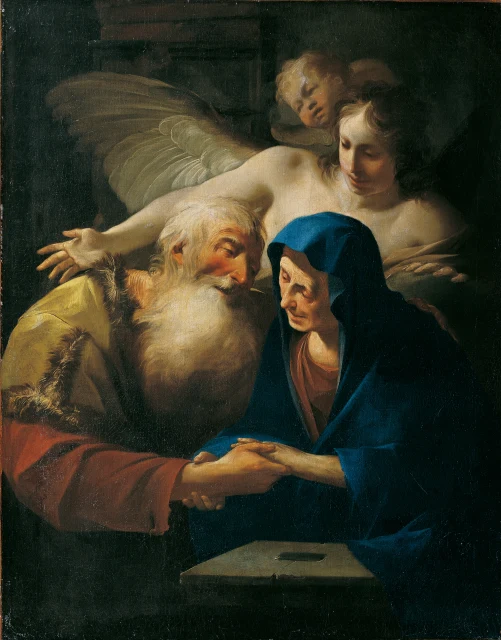
He had come a long way to get there. Born in 1698 in Welsberg, a village in the Puster Valley, he was sent to Italy around 1722 at the expense of the prince-bishop of Gurk in Carinthia. He studied in Venice, Rome, Naples and Bologna, and took most from two painters, Giambattista Piazzetta in Venice, with his strong fall of light and shadow, and Francesco Solimena, the leading painter of Naples. His first large commission, finished in 1728, was the high altarpiece and the dome fresco of the church of Saint Cajetan in Salzburg.
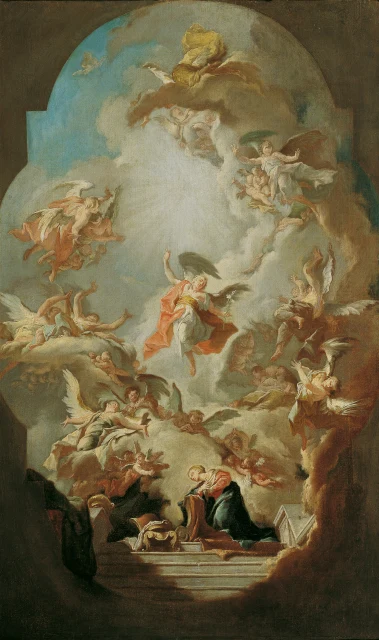
The abbey ceilings followed in quick succession. Troger painted the marble hall at Melk in 1731, the church dome at Altenburg and the library at Zwettl in 1733, and in 1739 the ceiling above the imperial staircase at Göttweig, where Emperor Charles VI appears as Apollo driving the chariot of the sun. Between 1748 and 1750 he frescoed the cathedral of Brixen, back in his native Tyrol, and from 1754 to 1757 he was rector of the Vienna Academy of Fine Arts. Younger painters such as Martin Knoller and Franz Anton Maulbertsch are counted among those who learned from him. Troger died in Vienna in 1762 and was buried in the Schottenkirche, the church of the city's Benedictine Scots Abbey.