Pedro Berruguete
1450–1504 · Crown of Castile · Renaissance
The story
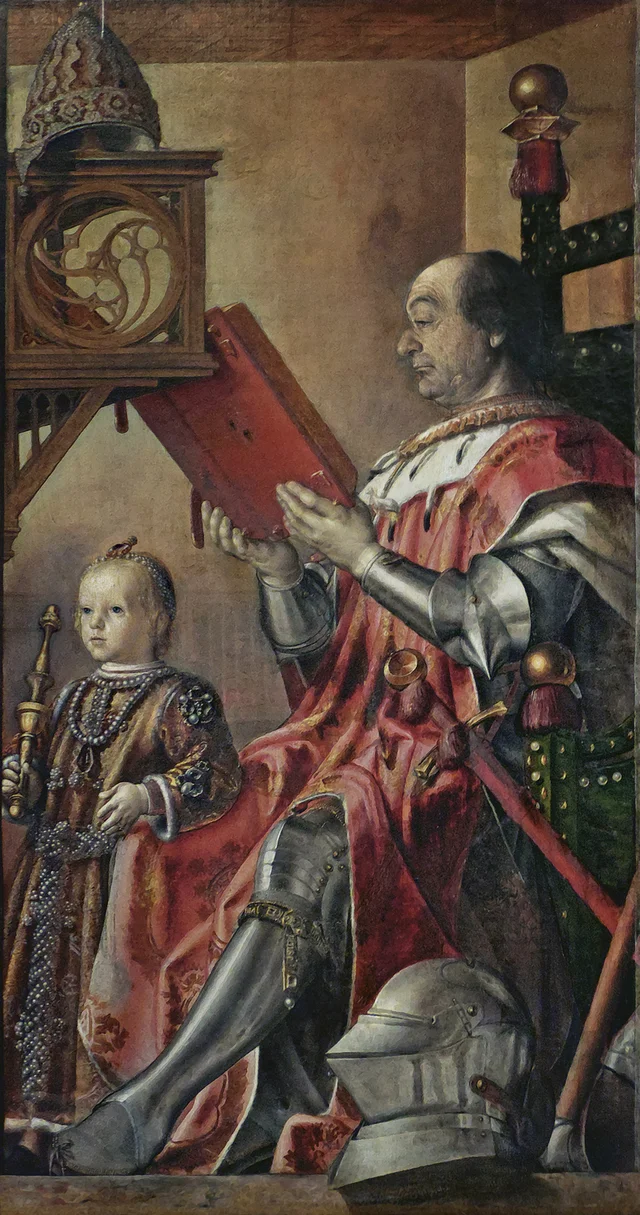
Around 1477, court records at Urbino, in central Italy, mention a painter called Pietro Spagnolo, Peter the Spaniard, working for Duke Federico da Montefeltro, one of the great patrons of the Italian Renaissance. Most historians believe this was Pedro Berruguete, and if so he stood inside one of the finest courts in Europe just as its new ideas about perspective and portraiture were taking shape. He worked alongside the Flemish painter Justus of Ghent on a celebrated set of portraits of learned men for the duke's studiolo, his private study.
When Berruguete returned to Castile around 1482, he brought that double training home. He kept the sharp Flemish love of detail and gold and folded in the Italian sense of space, which is why he is often called the first painter to carry Renaissance ideas into Spain.
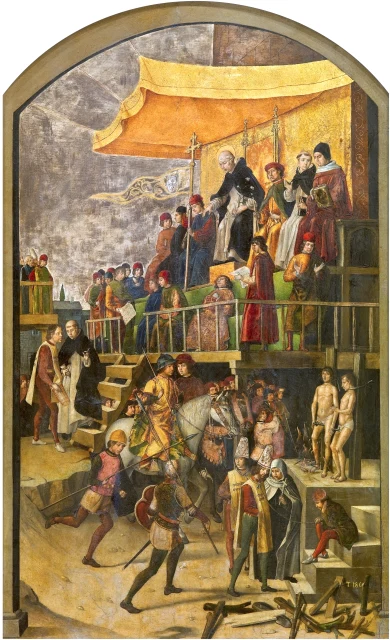
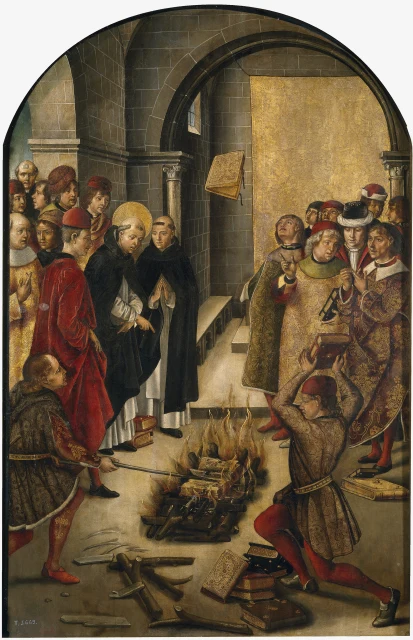
His most talked-about works came out of the young Spanish Inquisition, then only a few years old. For the convent of Santo Tomás in Ávila he painted Saint Dominic presiding over an auto-da-fé, a public sentencing of heretics, with the condemned bound to stakes at the edge of the panel. He treated it as a solemn ceremony in the terms of its own day. Berruguete died around 1504 in Ávila, and his son Alonso grew up to become the most important sculptor of the Spanish Renaissance, which is why the father is sometimes called Berruguete el Viejo, the elder, to tell the two apart.