Pelagio Palagi
1775–1860 · Papal States, Kingdom of Sardinia · Neoclassicism, Romanticism
The story
Walk through the royal palace in Turin, or the castle of Racconigi to the south of the city, and a great deal of what you see in the rooms of King Charles Albert was designed by one man, down to the floors, the furniture and the fireplaces. Pelagio Palagi was a painter by training, and in 1832 the king called him to Piedmont to remake the Savoy residences. At Racconigi he created the Etruscan Cabinet, the king's study, furnished in a style drawn from Etruscan antiquity. In Turin he designed the great iron railing in front of the royal palace, built between 1835 and 1842 with two statues of horsemen, the twins Castor and Pollux.
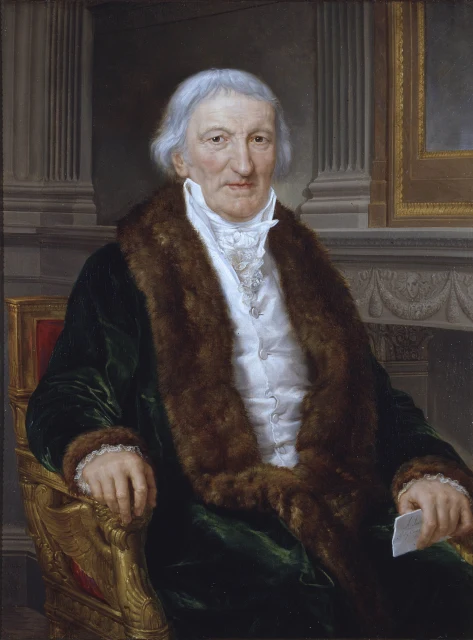
He was born in Bologna in 1775 and trained there, then spent nine years in Rome, where he painted for the Quirinal palace in the years of Napoleon's rule. In 1815 he moved to Milan, opened a private school in competition with the Brera academy, and became a sought-after portraitist of the Lombard nobility, and of the Austrian emperor himself.
Palagi collected antiquities all his life. When he died in Turin in 1860 he left his collections to his native Bologna, and his Egyptian pieces are the core of the Egyptian section of the city's archaeological museum.