Peter Fendi
1796–1842 · Austrian Empire · Biedermeier
The story
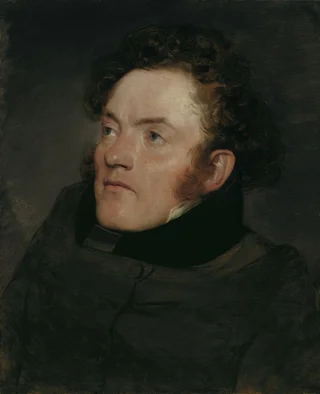
As an infant in Vienna, Peter Fendi fell from a changing table and injured his spine, an accident that shaped his body for life. It did not keep him from art. At 13 he entered the Academy in Vienna, and by his 20s he had a steady post drawing and engraving coins and antiquities for the imperial collection.
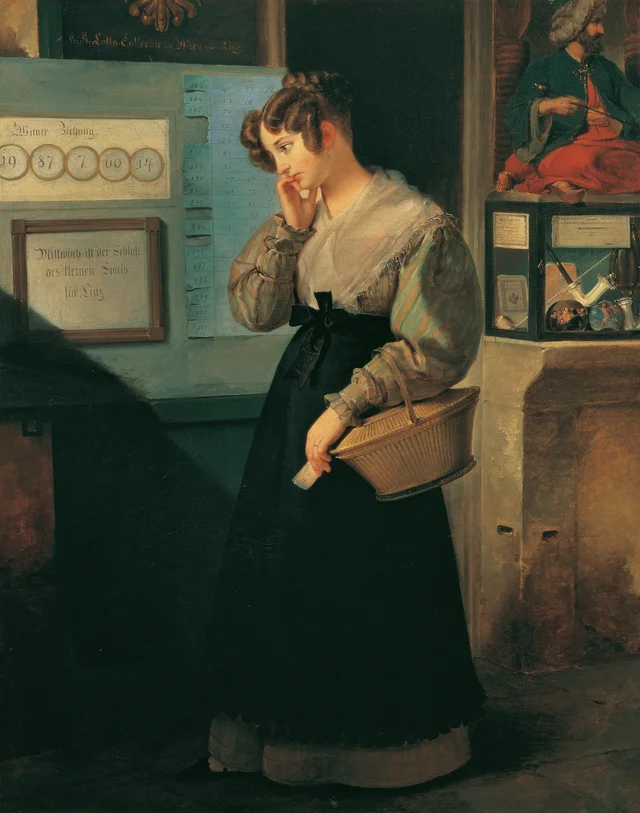
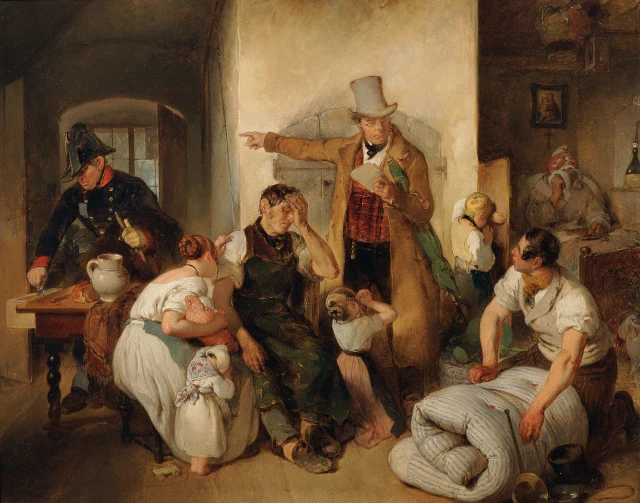
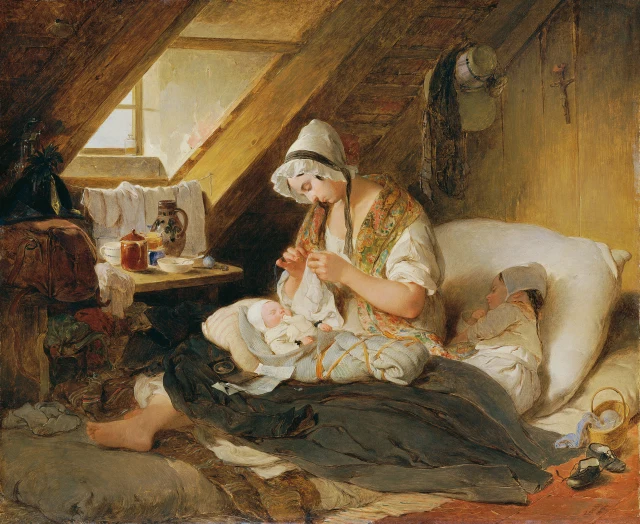
Fendi became one of the warmest painters of the Biedermeier, the cosy, inward-looking style of a Vienna that had turned domestic after the Napoleonic wars. He made small, tender genre scenes of ordinary life: children, a family at the pawnshop, a girl at prayer, working in oil and in delicate watercolour. He looked back to Dutch masters like Adriaen van Ostade, whose 17th-century peasant interiors he clearly loved.
He was also a technical pioneer. His multicoloured prints are counted among the early achievements of colour lithography, then a brand-new way of printing pictures. The court valued him, he won a gold medal in 1821, and the Vienna Academy elected him a member in 1836. He died in Vienna in 1842, a few days short of 46.