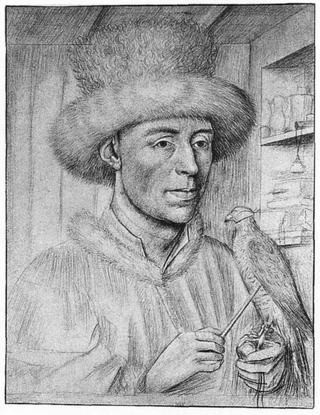
Petrus Christus
Southern Netherlands · Early Netherlandish painting
The story
When Jan van Eyck died in 1441 the greatest painter in northern Europe left a gap in Bruges, and Petrus Christus stepped into it. He became the city's leading master, finishing work in van Eyck's manner and clearly studying his panels closely, and for a long time some of his pictures were taken for the older man's.
But Christus did something van Eyck had not. He seems to have been the first painter in the North to build space around a single vanishing point, the geometric perspective being worked out in Italy at the same time, so that his interiors recede into a coherent box of a room. His painting known as A Goldsmith in His Shop, dated 1449, shows a goldsmith weighing a ring at his counter while a well-dressed couple looks on, everything from the scales to the convex mirror rendered with sober exactness. It sits somewhere between a religious image, a portrait, and a scene of everyday trade, and it is often called an ancestor of later merchant and genre painting.
Christus joined the Bruges painters' guild in 1444 and stayed in the city the rest of his life. Records show him active in a religious confraternity there, and he died around 1475, his output small but his handful of dated works enough to fix him as a real innovator.
More articles
Works
9 works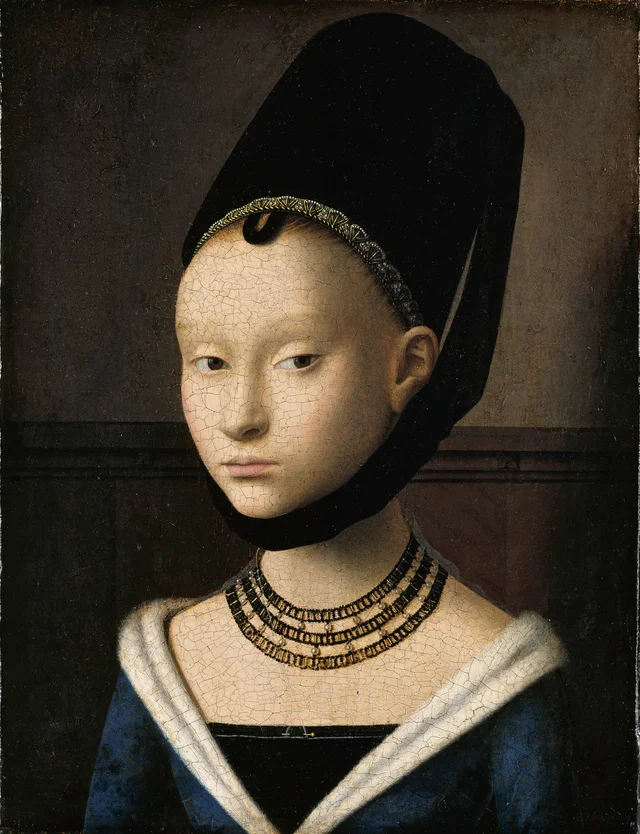 Portrait of a Young GirlPetrus Christus, 1470
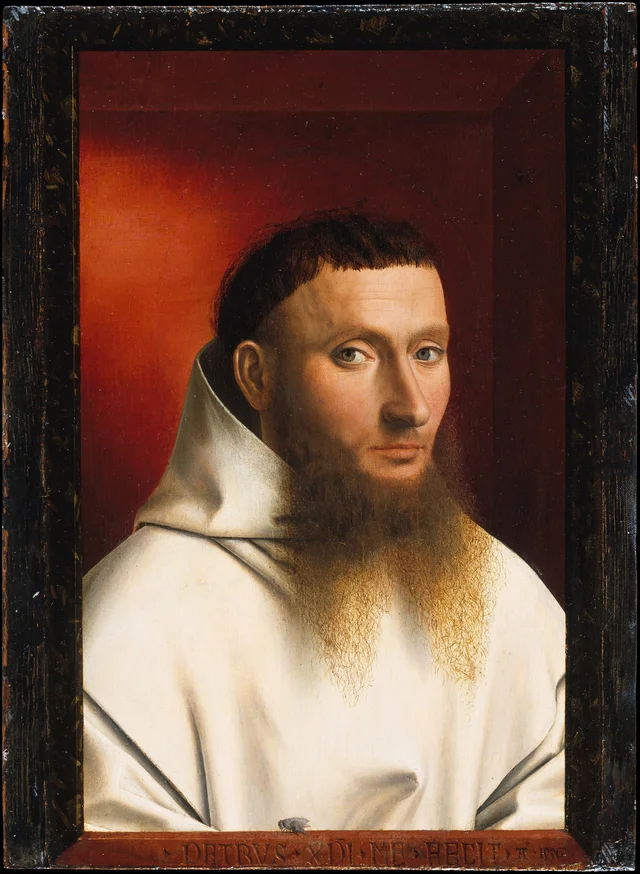 Portrait of a CarthusianPetrus Christus, 1446
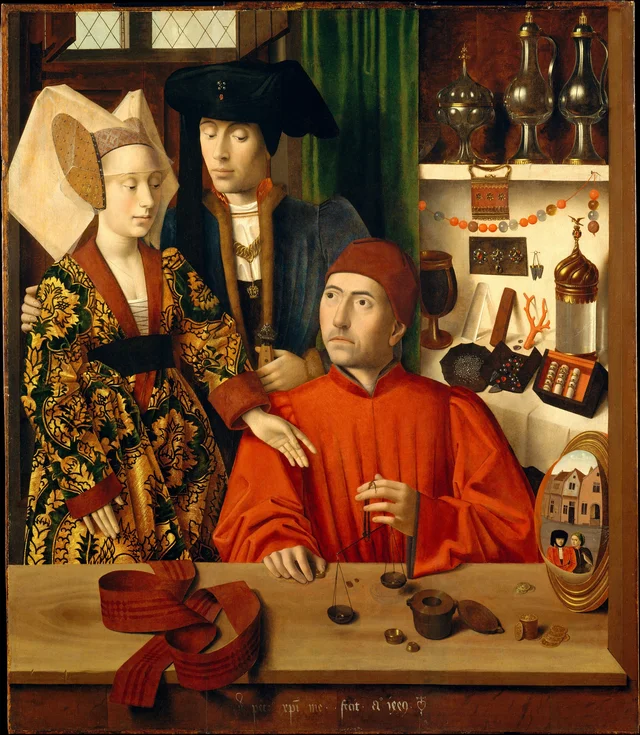 A Goldsmith in His ShopPetrus Christus, 1449
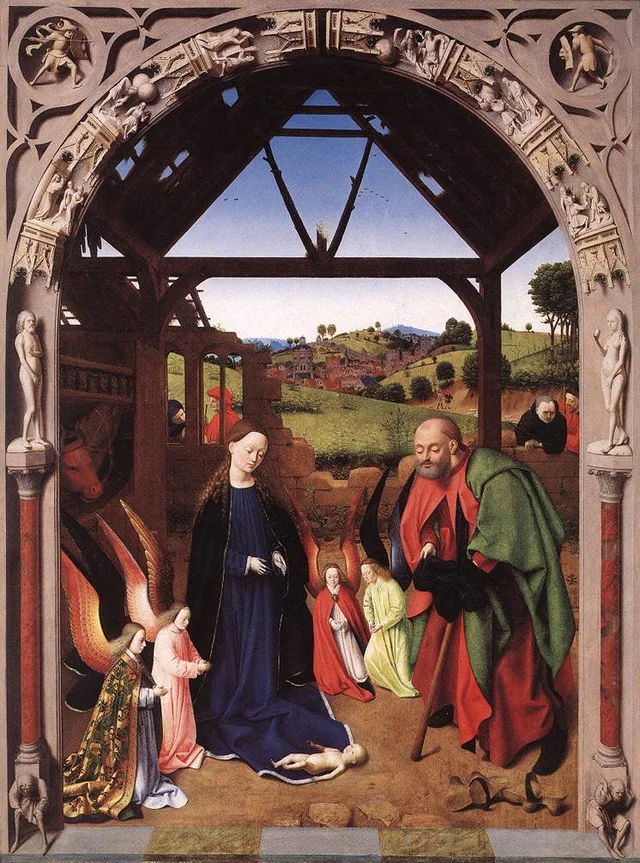 NativityPetrus Christus, 1450
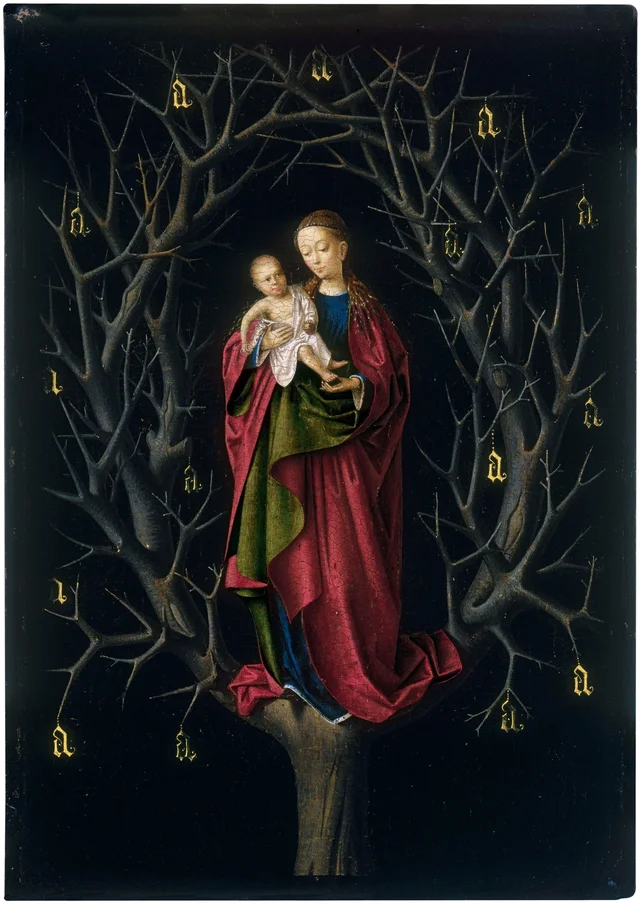 Madonna of the Dry TreePetrus Christus, 1462
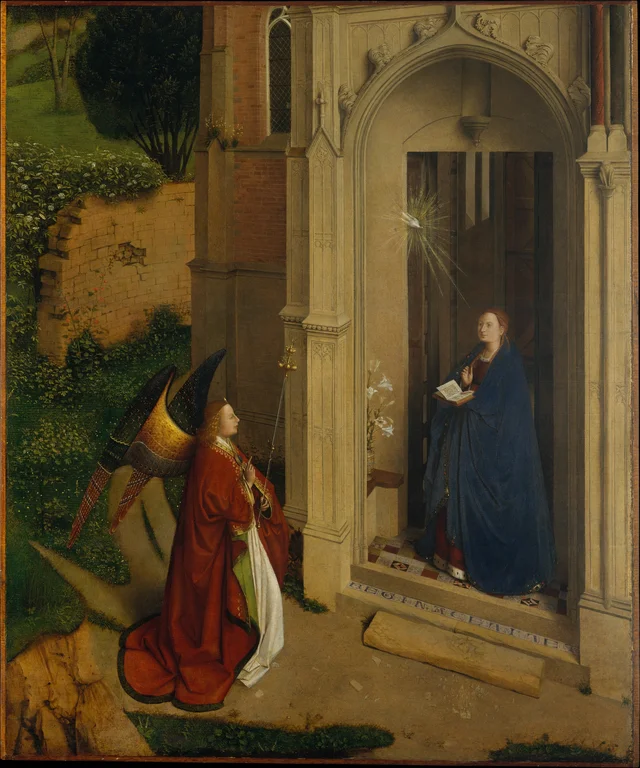 The AnnunciationPetrus Christus, 1450
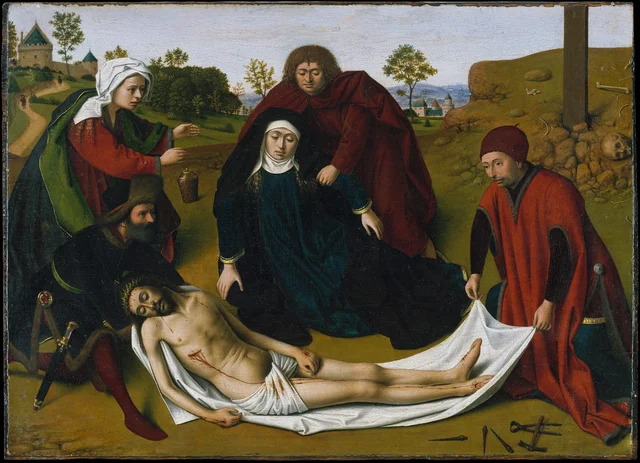 The LamentationPetrus Christus, 1450
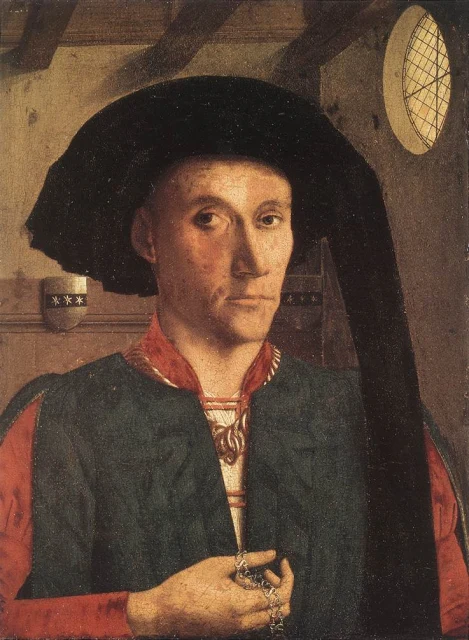 Edward GrimstonPetrus Christus, 1446
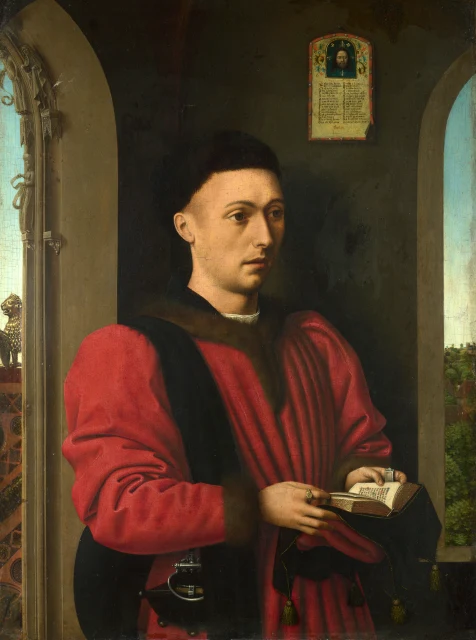 Portrait of a Young ManPetrus Christus, 1455