Philip James de Loutherbourg
1740–1812 · France, United Kingdom of Great Britain and Ireland, Switzerland · Romanticism, Neoclassicism
The story
Around 1773, London's most famous actor-manager, David Garrick, handed a French newcomer control of the stage at his Drury Lane theatre. Philip James de Loutherbourg, born in Alsace and trained in Paris, spent the next years turning painted flats into weather. He worked with coloured silk screens and lamps to throw storms, moonlight and fire across the boards, and he is often credited with bringing three-dimensional scenery and gauze effects to the English theatre.
In 1781 he left the playhouse to build something stranger of his own. His Eidophusikon was a miniature mechanical theatre, a frame about six by eight feet, in which moving painted scenes lit from behind imitated a sunrise, a shipwreck, a thunderstorm over the Thames. Audiences of about 130 paid to watch pictures that seemed to move, and the painter Gainsborough was among those who came back again and again.
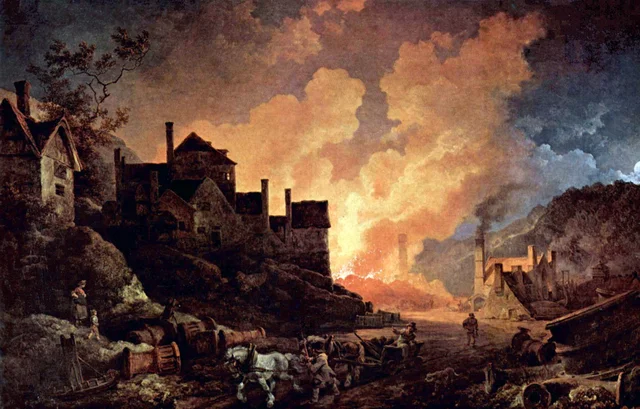
De Loutherbourg painted on canvas too, dramatic landscapes and battle scenes that hang today in British collections, and he was elected to the Royal Academy. Later in life he turned to faith healing, drawing crowds to his home in Hammersmith who believed he could cure the sick by touch. He is buried at Chiswick, in a tomb designed by the architect Sir John Soane.